On a cool January morning in a Greenacres ranch house, the tile in the hallway outside the guest bathroom feels warm under bare feet. Nobody has run hot water in hours. The last water bill came in well above normal, and late at night, with everything off, there is a faint sound of running water somewhere under the floor.
Those are classic slab leak signs. A slab leak is a leak in a water supply or drain line under or within the concrete slab that most South Florida homes are built on. Fixing the pipe is a licensed plumber’s job. The water spreading under the floors and up the bottom of the drywall is a separate problem, and it turns into mold if it is missed. This article covers the warning signs, how a plumber confirms the leak, what the water does underneath, and what to do first.
What is a slab leak?
Most South Florida homes sit on a concrete slab poured on the ground, with no basement or crawl space underneath. The supply lines that feed sinks, showers, and the water heater, and the drain lines that carry wastewater out, often run beneath or inside that slab. When one of them leaks, the water has nowhere obvious to go. It soaks the soil and the concrete, moves through cracks and joints, and spreads under whatever flooring sits on top.
The causes are ordinary. Older copper or cast iron lines wear out with age, joints and fittings let go, and a pipe can wear where it rubs against concrete or rock. Shifting soil can stress a line too.
There are two kinds, and they behave differently:
- Supply line leaks. Supply lines are always under pressure, so they leak around the clock. These are the leaks that show up on the meter and the bill. A leak on the hot side also keeps the water heater working and can warm the floor above it.
- Drain line leaks. Drain lines only carry water when a fixture is used, so they leak in bursts. They do not move the water meter, which makes them harder to catch. The clues tend to be odor, damp flooring near a bathroom or kitchen, and sometimes slow drains.
Common slab leak warning signs
- A jump in the water bill with no change in water use
- The water meter moving with every fixture turned off (the next section shows how to check)
- The sound of running water when nothing is on, often clearest at night
- Warm spots on tile or other hard flooring, which point to a hot-water line
- Damp, cupping, or loose flooring, including tile that sounds hollow
- Damp, swollen, or stained baseboards, and paint bubbling at the bottom of a wall
- A musty smell in one part of the house, often near a bathroom, the kitchen, or the laundry
- New cracks in tile or grout lines. Cracks have many causes, but a crack near a damp or warm area deserves a closer look.
- Mildew or dampness under carpet, often along one wall
One sign on its own is not proof. Two or three together, especially a moving meter plus damp flooring, are reason to call a plumber for leak detection. For more clues, see our guide to hidden water damage signs every homeowner should know.
Check your water meter first
A meter check takes a few minutes and shows whether water is moving when it should not be.
- Turn off everything that uses water, including the ice maker and irrigation system.
- Find the meter. It is usually in a box in the ground near the street.
- Look at the leak indicator, a small triangle or dial on the meter face that turns whenever water flows, and write down the full reading.
- Wait at least 15 minutes without using any water, then check again.
If the indicator is turning or the reading changed, water is leaking somewhere, though not necessarily under the slab. Toilets are a frequent culprit. Put a few drops of food coloring in each tank, wait 15 minutes without flushing, and look for color in the bowl. Check outdoor hose bibs and irrigation lines too. If those are ruled out and the meter still moves, call a plumber. This test does not catch drain line leaks.
How a licensed plumber confirms and locates a slab leak
A plumber should confirm the leak before anyone breaks concrete. The usual tools:
- Pressure testing. Isolating the hot and cold lines shows which one is losing pressure.
- Acoustic listening equipment. Water escaping a pressurized pipe makes noise, and ground microphones help pinpoint where it is loudest.
- Thermal imaging. A thermal camera can show the warm area a hot-water leak spreads across the floor.
- Camera inspection. For a suspected drain leak, a camera run through the line can show breaks or separated joints.
Once the leak is found, the plumber will recommend a repair. The common approaches are:
- Spot repair: opening the slab at the leak, repairing that section of pipe, and patching the concrete.
- Reroute: abandoning the leaking section under the slab and running a new line through the walls or attic.
- Repipe: replacing a larger part of the plumbing, usually considered when the lines are old or have leaked more than once.
Which approach fits depends on where the leak is, the age and condition of the pipes, and how many leaks there have been. That decision belongs to your plumber. On the restoration side, what matters is knowing where they will open floors or walls so drying can be planned around it.
The damage underneath: what slab leak water does to your home
Water from a slab leak comes up from below. Once it reaches the top of the slab, it spreads sideways in the thin space between the concrete and the flooring, where nobody can see it.
- Flooring. Laminate and engineered wood swell and cup at the seams. Carpet pad soaks up water and holds it. Vinyl plank traps water underneath, and tile can look fine while the setting material below stays wet.
- Baseboards. MDF and particleboard trim swell and split when they wick water.
- Drywall. The bottom edge of the drywall sits at or near the slab and wicks water upward behind the baseboard, staining paint and feeding mold on the back of the wall.
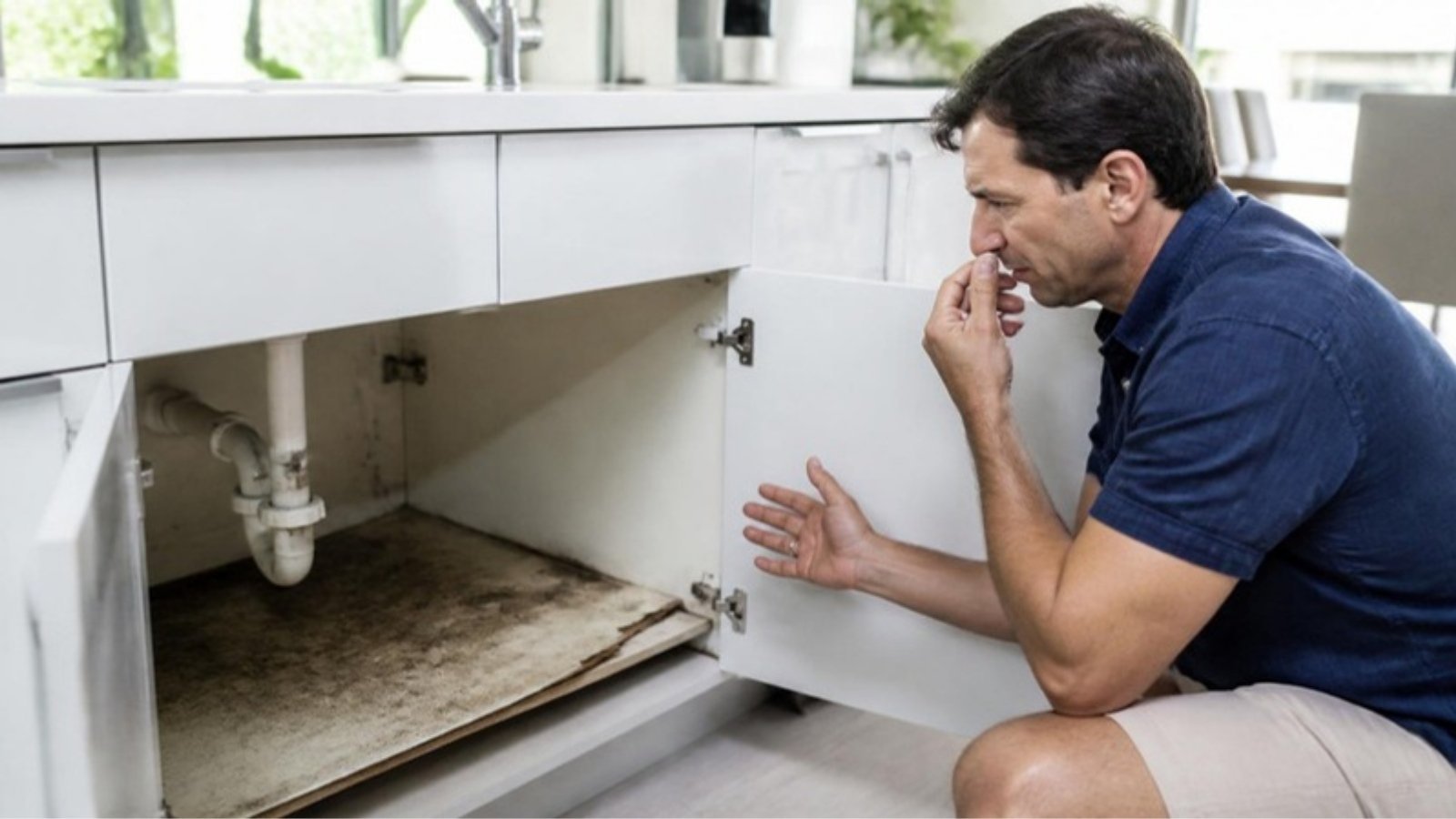
- Cabinets. Kitchen and bathroom cabinets often have particleboard bases that swell, and the hollow space under the cabinet floor traps moisture with no airflow.
Because the water travels under the flooring, the wet area is often much larger than the spot above the leak. A leak under a hall bathroom can wet the hallway, a bedroom closet, and the wall of the next room before anything shows. Slab leaks also tend to run for a while before the first sign appears, and mold can start growing on damp materials within 24 to 48 hours, so hidden growth along baseboards and under cabinets is a real possibility by the time anyone notices. For more, see how a slow plumbing leak causes damage and how EPR saves flooring, walls, and ceilings from water damage.
What to do first if you suspect a slab leak
- Shut off the main if the meter keeps moving. Your main shutoff valve is often outside, near where the water line enters the house. Closing it stops more water from reaching the slab until the plumber arrives.
- Photograph and record. Take a short video of the meter indicator turning, and photograph warm spots, damp baseboards, cupped flooring, and recent water bills before anything is moved or removed.
- Call a licensed plumber for leak detection and repair, and keep a copy of their findings.
- Call your insurance agent or company. Coverage depends on your policy, and some policies treat repair of the pipe differently from the resulting damage, so ask your agent what applies. Our guide to water damage insurance claims in Florida covers the process.
- Get the water damage assessed. A restoration company should map moisture in the surrounding rooms, ideally before or alongside the plumbing repair, so the drying plan and the plumber’s access plan fit together.
How Edwards Property Remediation handles slab leak water damage
Once the plumber has found the leak, our water damage restoration work covers everything the water reached:
- Coordination with your plumber. We confirm where the leak was, how long it may have been running, and where the slab or walls will be opened.
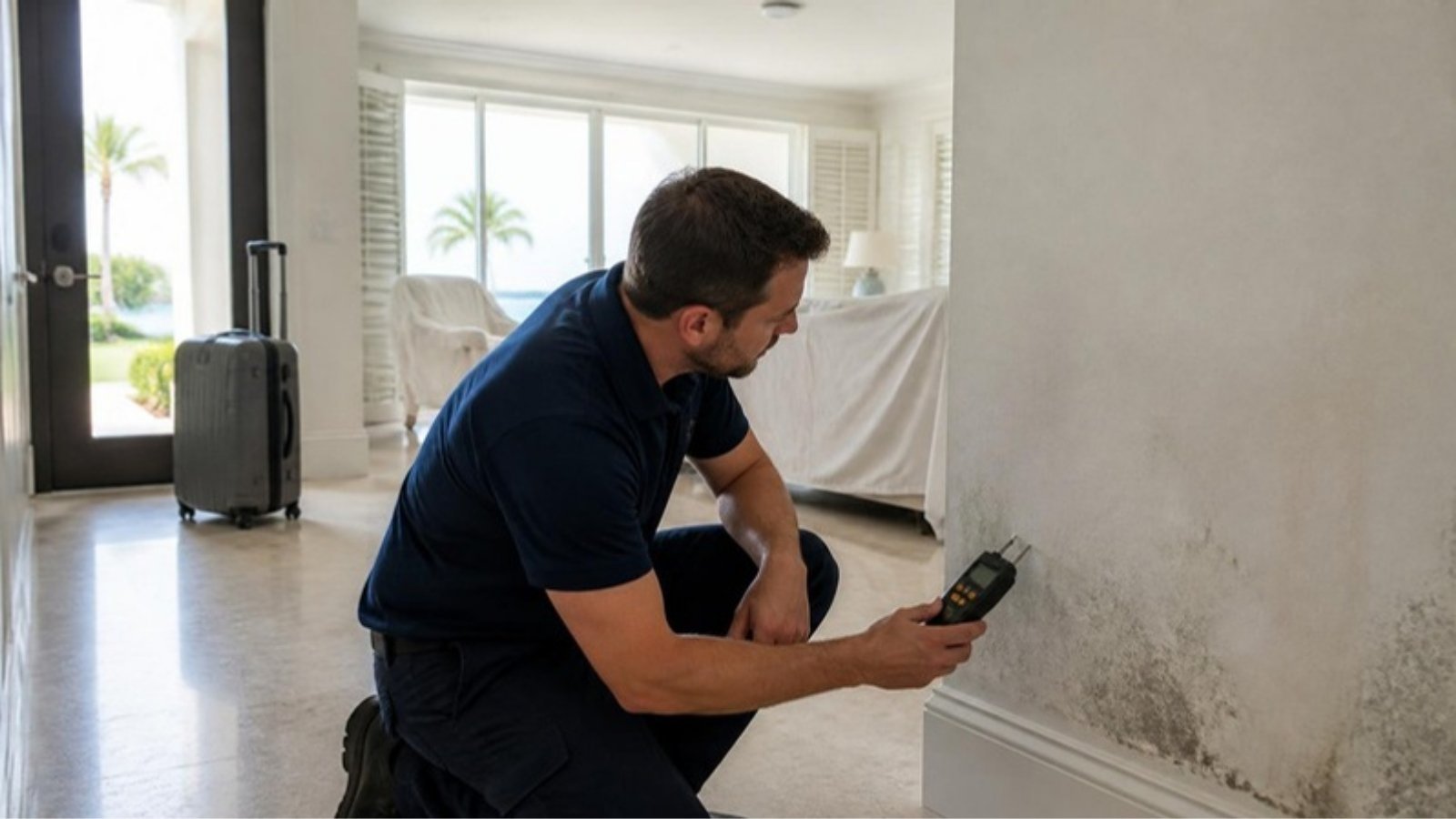
- Moisture mapping across rooms. Moisture meters and thermal imaging check flooring, baseboards, drywall, and cabinet bases in the leak room and every room around it. Our article on the science of moisture mapping explains how those readings set the job’s boundaries.
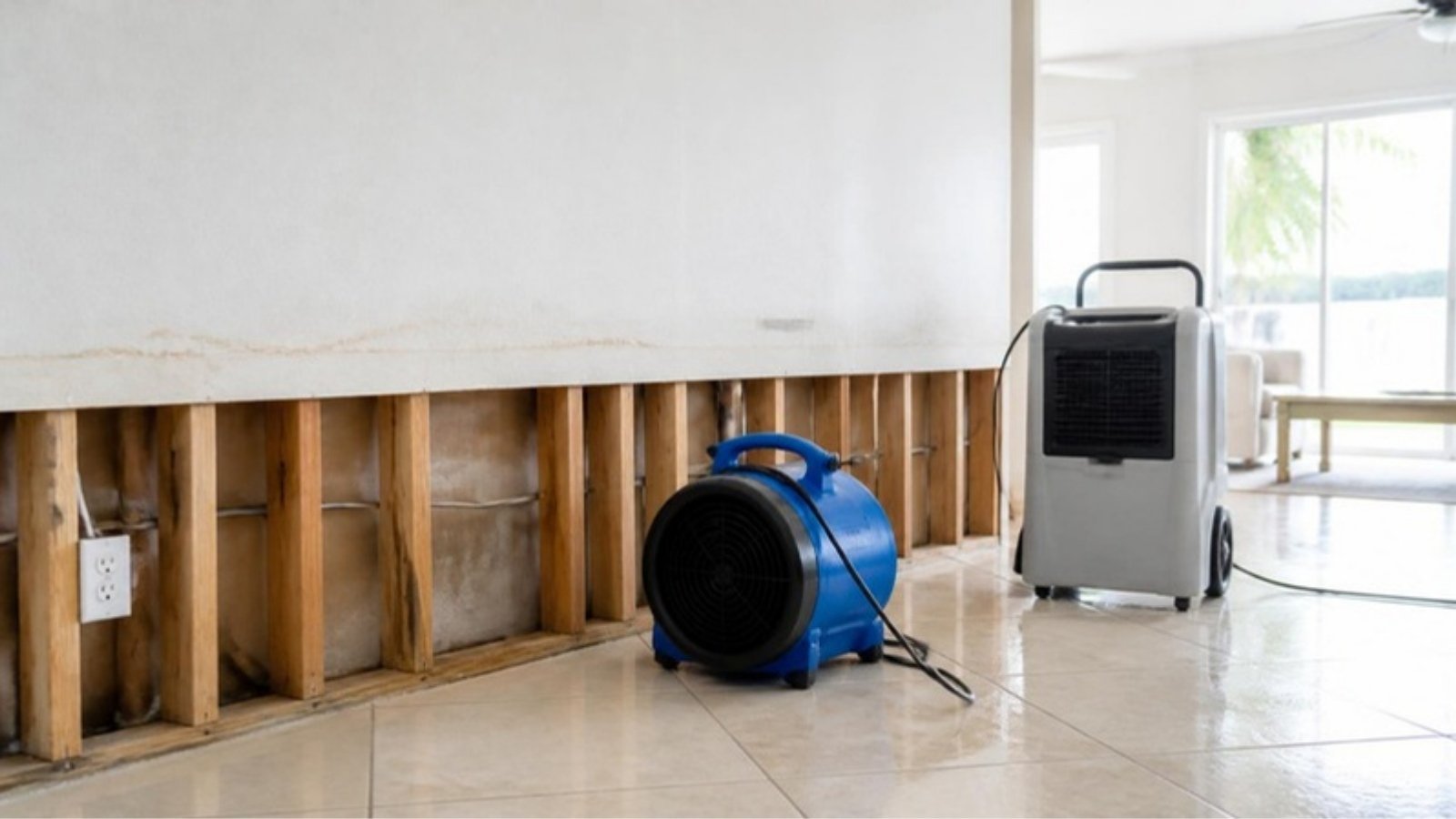
- Removing what cannot be dried. Where needed, swollen baseboards, soaked carpet pad, cupped laminate or wood, the bottom of wet drywall, and cabinet toe-kicks come out so the slab and wall cavities can dry. Materials that can be dried in place stay.
- Structural drying. Dehumidifiers and air movers dry the slab, framing, and remaining drywall. Concrete gives up water slowly, so progress is tracked with moisture readings rather than judged by how the surface looks. If you are staying in the house, see living with structural drying equipment.
- Mold checks. Baseboards, drywall bottoms, and cabinet bases are checked for growth. Where it is found, mold remediation happens under containment before anything is rebuilt, and mold testing can document conditions when needed.
- Insurance-ready documentation. Photos, moisture readings, drying logs, and a list of removed materials go into a file for your insurer.
Frequently asked questions
How can I tell a slab leak from another leak in the house?
Start with the water meter check. If water is moving with everything off, and toilets, outdoor faucets, and irrigation are ruled out, the leak is likely underground or under the slab. Warm spots on the floor, damp baseboards, or the sound of running water make a slab leak more likely. A licensed plumber’s leak detection confirms it.
Should I shut off my water if I suspect a slab leak?
If the meter keeps moving with all fixtures off, yes. Closing the main shutoff stops more water from soaking the slab and flooring until a plumber can isolate and repair the line. Ask the plumber whether the water heater should be turned off while the water is off.
Can a slab leak cause mold?
Yes. Water from a slab leak soaks the underside of flooring, the bottom of drywall, baseboards, and cabinet bases, all places with little airflow. Mold can start growing on damp materials within 24 to 48 hours. A moisture check after the repair shows whether those materials need drying or removal.
Will my floors have to come up?
Not always. It depends on the plumber’s repair method, how long the leak ran, how far the water spread, and the type of flooring. Some materials can be dried in place, while soaked carpet pad, swollen laminate, and particleboard cabinet bases usually have to come out. Moisture mapping shows what is wet before those decisions are made.
Does homeowners insurance cover a slab leak?
It depends on your policy. Some policies treat repair of the pipe itself differently from the resulting damage to floors, walls, and cabinets, and some treat gradual leaks differently from sudden ones. Photograph everything, keep the plumber’s leak detection report, and ask your agent what applies.
Wet floors after a slab leak in Palm Beach County
Edwards Property Remediation dries out homes after slab leaks for homeowners and property managers across Palm Beach County, including Greenacres, Boca Raton, West Palm Beach, Lake Worth, and Boynton Beach. If your plumber has found a slab leak, or your floors are damp and you cannot see why, call (754) 221-6945, email info@eprllc.net, or book an appointment online.