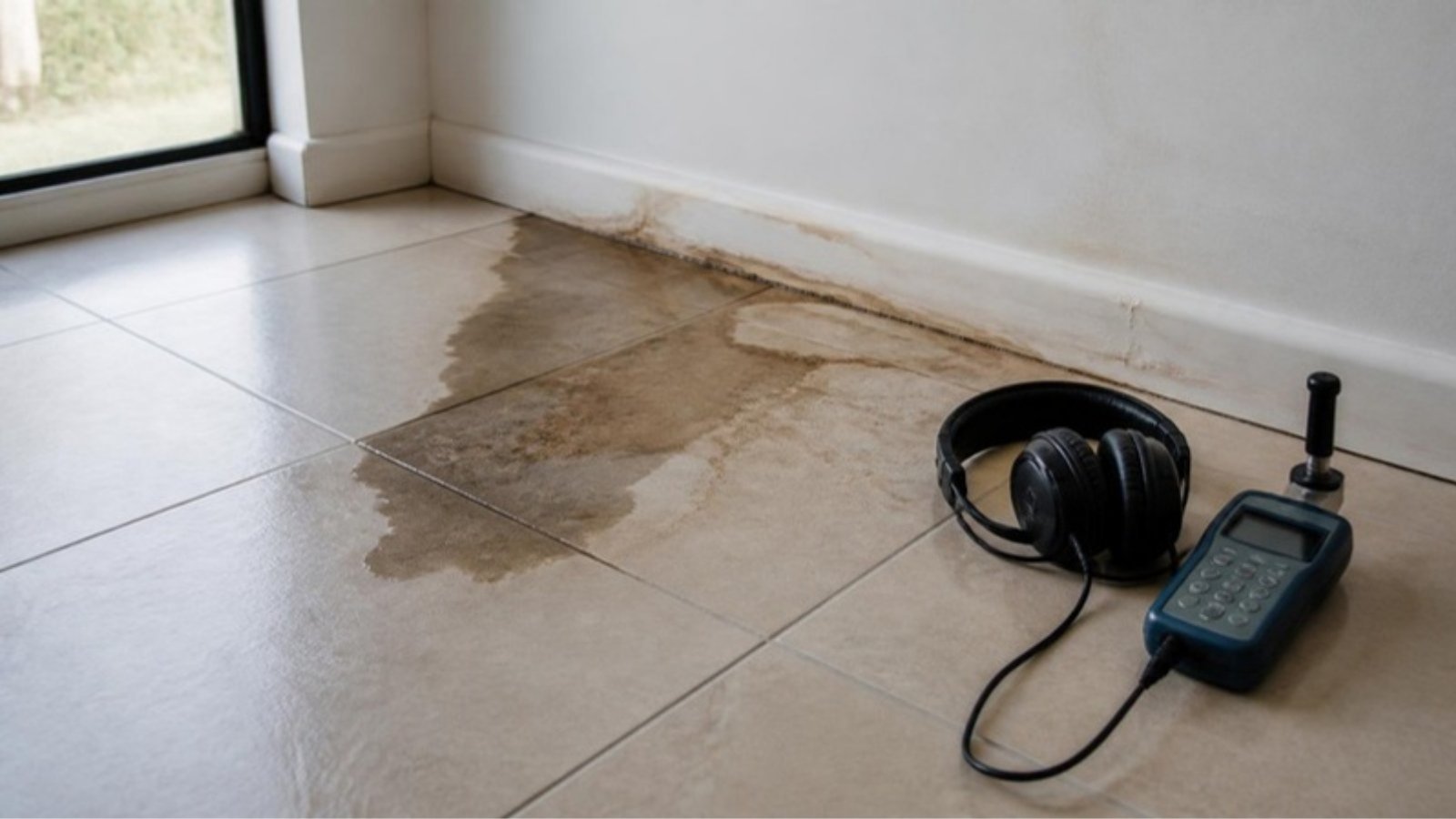
The dishwasher in a Delray Beach kitchen leaked overnight in late August. By morning there was water across the tile and into the hallway. It got mopped up, a box fan ran for a day, and the floor looked fine. Three weeks later, opening the sink cabinet brings a smell like a damp cellar, and the hall closet on the other side of that wall smells the same.
A musty smell after water damage is one of the most useful clues a house gives you. It usually means something is still wet, or stayed wet long enough for mold or bacteria to start growing, somewhere nobody has looked yet. This article covers what the odor is, why it appears weeks after cleanup, how to tell it from other smells, where to look, and why sprays and paint will not fix it.
What causes a musty smell after water damage
Mold can begin growing on wet drywall, wood, carpet pad, and cardboard within 24 to 48 hours, and bacteria move in on damp materials too. As they grow and break down the material, these microbes give off gases called microbial volatile organic compounds, or MVOCs. That is what your nose reads as musty, earthy, or like wet cardboard.
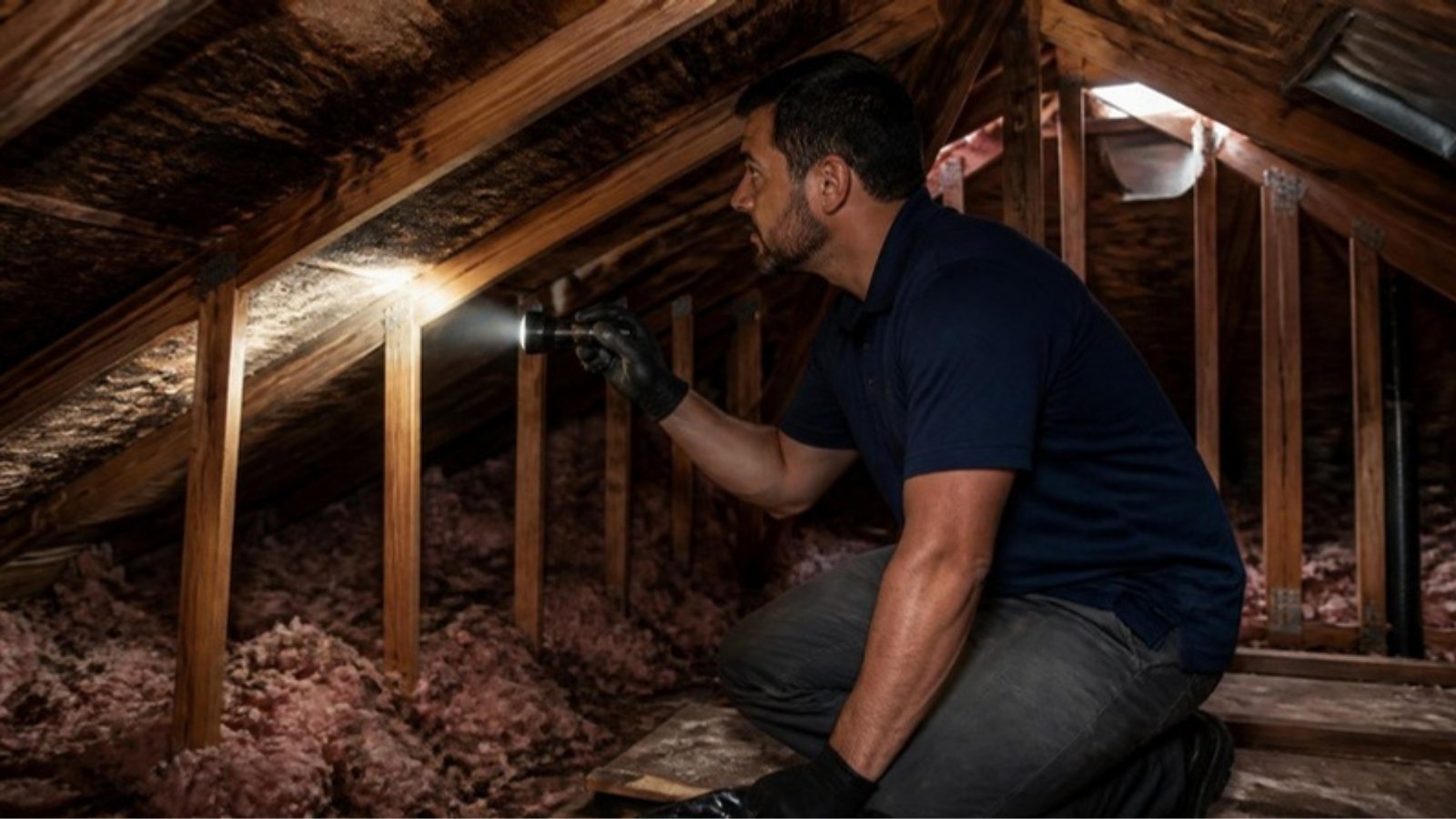
The odor often shows up before anything is visible, because the growth may be on the back of the drywall, under a cabinet floor, or inside the carpet pad. Its strength is not a reliable guide to the size of the problem either. A small patch in a closed closet can smell strong, while a larger area inside a wall smells faint from the room. What the smell does tell you is that something has stayed damp long enough for microbes to be active.
Why the odor comes back days or weeks after cleanup
The usual story goes like this. The water you could see was removed, the surfaces dried, and everyone moved on. The water you could not see stayed put, usually in one of these places:
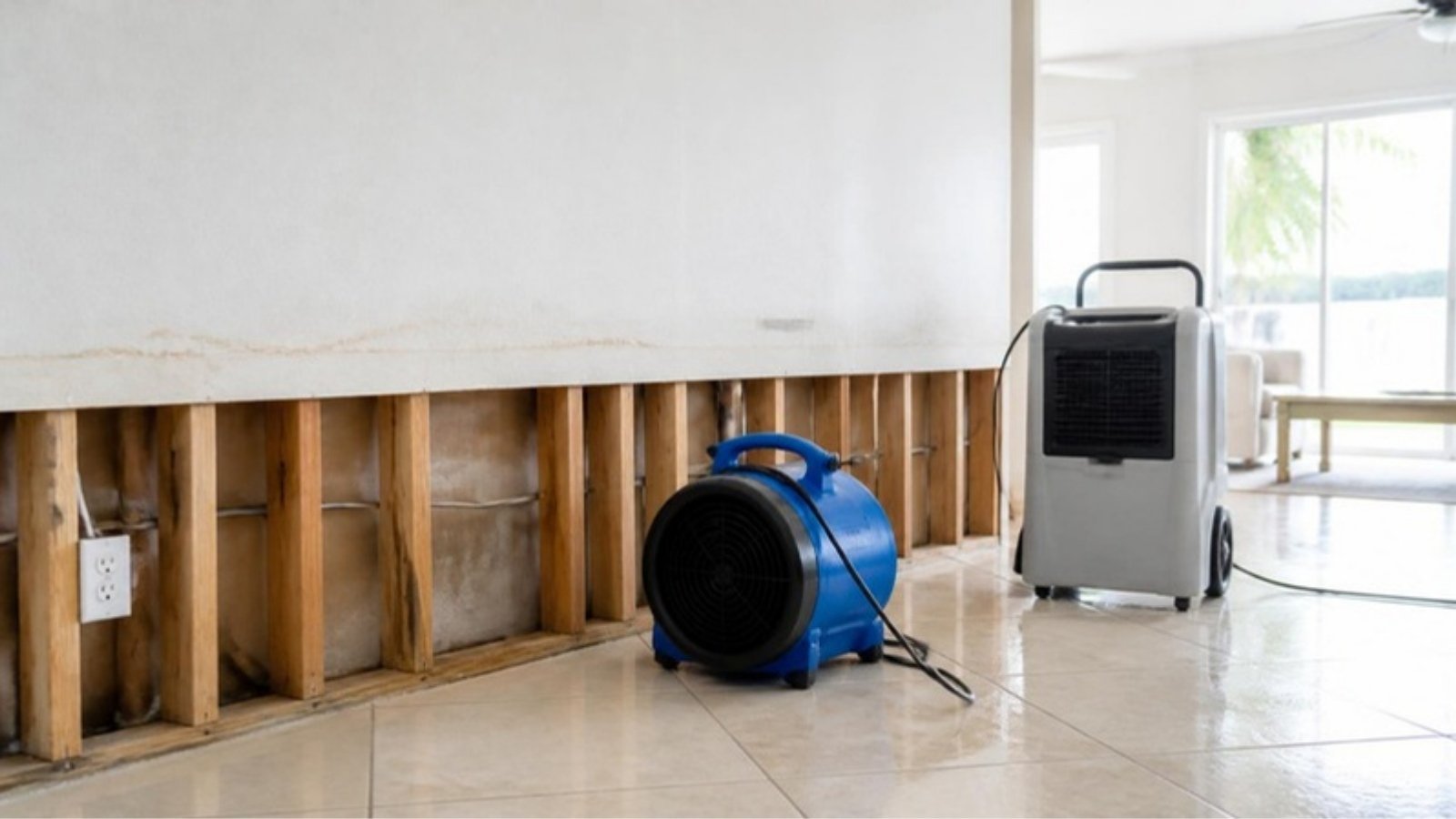
- Wall cavities. Drywall wicks water upward, and the bottom few inches can stay wet behind a baseboard long after the tile is dry.
- Under cabinets. Kitchen and bathroom cabinets usually have a hollow space below the cabinet floor, closed off by the toe-kick. Water that runs under there has no way out and no airflow.
- Carpet pad. Carpet can feel dry on top while the pad and the wooden tack strip underneath are still damp.
- Under hard flooring. Laminate, engineered wood, and vinyl plank sit on an underlayment that traps water against the slab or subfloor.
Fans dry surfaces, not cavities, and in a South Florida summer open windows mostly let in humid air. The hidden materials stay damp and the smell builds slowly, which is why many homeowners never connect it to the leak. We cover the same cycle in why mold keeps coming back after water damage.
Musty, sewer gas, or AC drain? Telling the odors apart
A true musty smell is earthy, like a damp cellar. It stays after you air the house out, it is strongest in cabinets, closets, or along one wall, and it is often worse on humid days. Before anyone opens a wall, rule out these look-alikes.
Rotten eggs or sewer gas
This is usually a dry P-trap. In a guest shower or a sink nobody uses, the water seal in the drain evaporates and lets sewer gas up. Run water in each sink, tub, and shower for a minute and flush every toilet. If the smell fades within a few hours, dry traps were the cause. If it stays, have a plumber check the toilet seals and drain lines. If your home has natural gas or propane and you smell rotten eggs near an appliance, treat it as a possible gas leak: leave the house and call your gas utility from outside.
Sour or swampy air from the vents
The drain pan under the air handler and the condensate line hold water all summer, and algae and slime grow in both. That odor tends to be sour and strongest when the system starts. Standing water in the pan or a slow drain line are the usual clues, and our guide to how AC leaks cause water damage covers what happens when that line backs up. If you see growth on the air handler or vents, leave the system off. The EPA advises against running an HVAC system you know or suspect is contaminated with mold.
Stale, closed-up air
A house shut for a week or a summer can smell flat and stale at first. That fades within a day of running the AC with interior doors open. A musty smell that survives it is a moisture problem.
Where to sniff and look
Your nose gets used to a smell quickly, so search right after you come in from outside. Open each cabinet and closet and sniff as soon as the door opens, including low near the baseboards. Then look closely at these spots:
- Sink base cabinets. Check each cabinet floor for swelling, peeling laminate, or dark staining, and press on it. A soft floor means water got under or into it.
- Baseboards. Look for swollen trim, gaps opening at the wall, bubbling paint, or caulk pulling away, especially on walls shared with a bathroom, kitchen, or laundry.
- Closets on exterior walls. Check the back corners at floor level and anything leather or cardboard stored on the floor.
- The AC closet. Look at the drain pan, the drywall around and below the air handler, and the floor at the base of the unit.
- Carpet edges. In a closet corner, lift the carpet edge with pliers and check the pad and tack strip for staining or dampness.
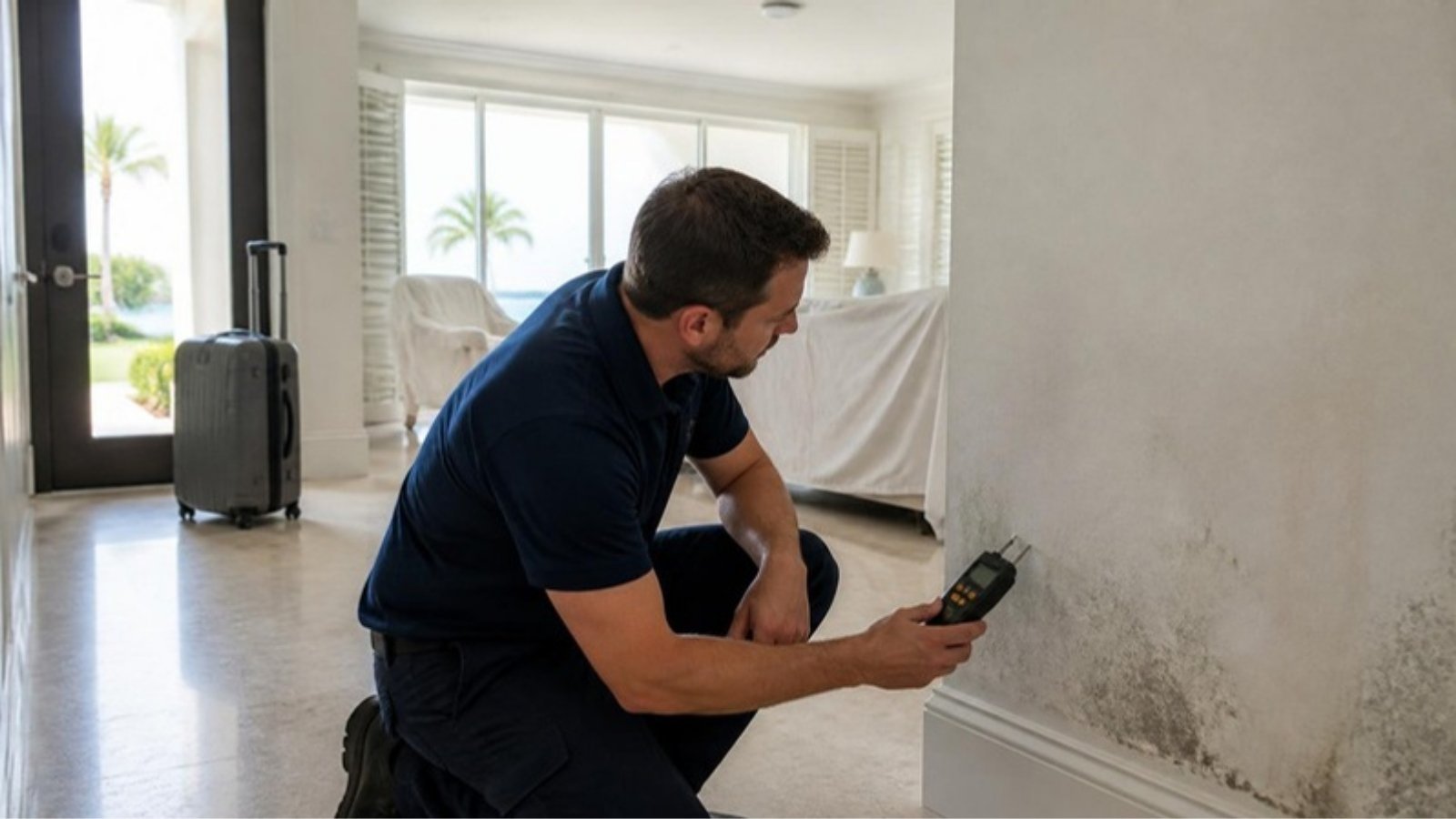
Note where the smell is strongest, and tell your technician. Avoid cutting into drywall or pulling up flooring yourself if you suspect growth behind it, because disturbing mold can spread spores to clean rooms. For more clues, see hidden water damage signs every homeowner should know.
Why air fresheners, ozone, and fresh paint do not fix it
Store-bought odor fixes cover the smell or pull some of it from the air. None of them dries the wall or removes the growth, so the smell returns.
- Air fresheners, plug-ins, and candles put a stronger scent on top. The source keeps growing, and the masking can delay finding it.
- Store-bought ozone generators at best mask or temporarily treat the odor while the source remains. Ozone generators should not be run in occupied spaces.
- Paint and stain-blocking primer cover a stain and can hold back an odor for a while. If the drywall behind is still damp or growing, both come back.
The order of work is the same for every odor job: find and remove the source, dry and clean what is left, and only then treat the air. Fire restoration follows the same rule, as our article on how smoke odor removal works after a property fire explains.
When to call, and how Edwards Property Remediation handles it
When to call for moisture mapping and mold testing
- The smell is still there several days after the leak was fixed and the area aired out
- You can smell it but cannot find a wet spot or visible growth
- Water got into a wall, under cabinets, or under flooring
- Baseboards are swollen, flooring is cupped, or a cabinet floor is soft
- The water came from a washing machine, dishwasher, or toilet overflow (IICRC gray or black water), which needs cleaning as well as drying
- Someone in the home has symptoms that seem connected to the house. For those, see a doctor.
How we handle odor after water damage
- History. When the leak happened, how it was cleaned up, and where the smell is strongest.
- Moisture mapping. Moisture meters and thermal imaging trace wet drywall, cabinet bases, and subfloor that look dry from the room.
- Mold testing when it is warranted. Sampling helps most when there is an odor with no visible source.
- Source removal and drying. Wet pad, swollen baseboards, and soaked drywall come out where needed, and the structure is dried to documented moisture levels with structural drying equipment.
- Remediation if there is growth. Mold remediation happens under containment and negative air pressure so cleanup does not push spores into clean rooms.
- Cleaning. Microbial cleaning and HEPA vacuuming of the framing, cabinet interiors, and subfloor that stay in place.
- Odor removal and air quality. With the source gone, remaining odor is treated, and HEPA filtration and humidity control through our indoor air quality control service bring the air back to normal.
Photos and moisture readings go into a file you can share with your insurer. Our article on how EPR improves air quality after water or mold damage covers the air quality stage.
How to keep a musty smell from coming back
- Keep indoor humidity below 60%. The EPA recommends staying under 60%, ideally between 30 and 50%. An inexpensive hygrometer shows where you stand.
- Dry spills and leaks within 24 to 48 hours. If the water is more than a mop can handle or ran under flooring, call for emergency water extraction instead of waiting.
- Keep the AC running in summer, even when you travel, and have the condensate line flushed during routine service.
- Put leak sensors under sinks and beside the washer and water heater.
- Let air move. Run bathroom exhaust fans, leave closet doors open, and keep furniture a few inches off exterior walls.
For more on South Florida humidity, see our guide to Florida humidity and mold growth prevention.
Frequently asked questions
Does a musty smell always mean mold?
Not always. Dry drain traps, a dirty AC drain pan, and a closed-up house all cause odors that get mistaken for mold. A musty, earthy smell that stays after you air the house out and run water in every drain usually means something is damp and microbes are active somewhere.
Why does the smell get stronger when it rains or the AC is off?
Damp materials dry more slowly in humid air, and the AC is what pulls moisture out of the air in a closed house. When humidity rises, hidden wet spots stay wet and the odor builds in still air. A smell that follows the weather usually points to trapped moisture.
Will an ozone machine get rid of a musty smell?
Not for long. At best, an ozone generator masks or temporarily treats the odor while the source stays in the wall, cabinet, or floor. Ozone generators should not be run in occupied spaces. The lasting fix is drying or removing the wet material and cleaning before the air is treated.
Do I need mold testing if I can smell mold but cannot see it?
That is when testing helps most. Moisture mapping usually comes first to find where the water went. Air or surface sampling can then help show whether there is hidden growth, and it gives you a record for an insurer, a buyer, or a tenant.
Does insurance cover a musty smell after water damage?
It depends on your policy and on what caused the water. Some policies treat a sudden leak differently from slow, long-term seepage, and some limit mold coverage. Photograph what you find, keep repair records, and ask your agent what applies.
A smell that will not clear in Palm Beach County
Edwards Property Remediation finds and removes the source of lingering odors for homeowners and property managers across Palm Beach County, including Delray Beach, Boynton Beach, Boca Raton, Lake Worth, and West Palm Beach. If a musty smell has outlasted the leak, call (754) 221-6945, email info@eprllc.net, or book an appointment online.