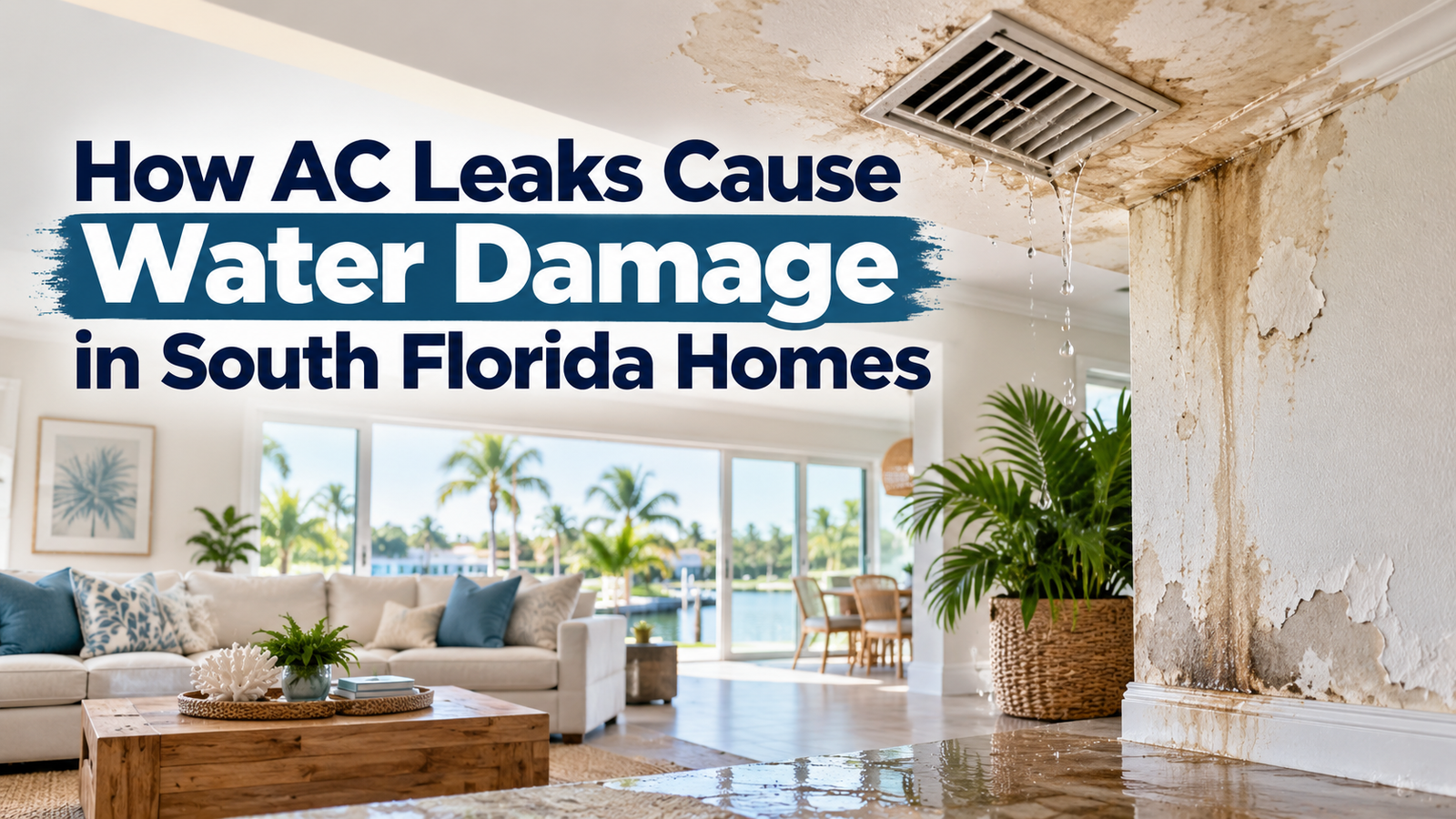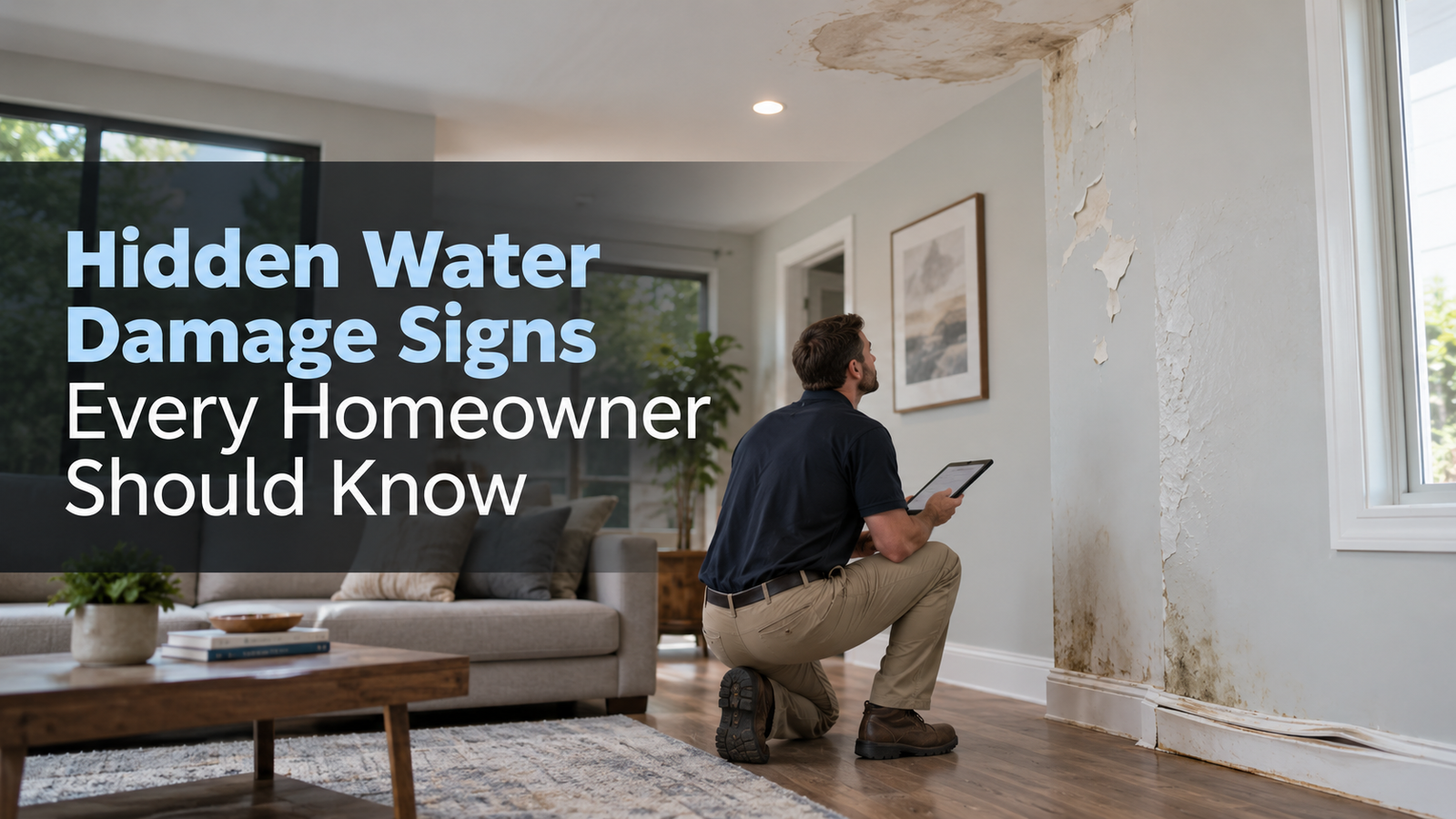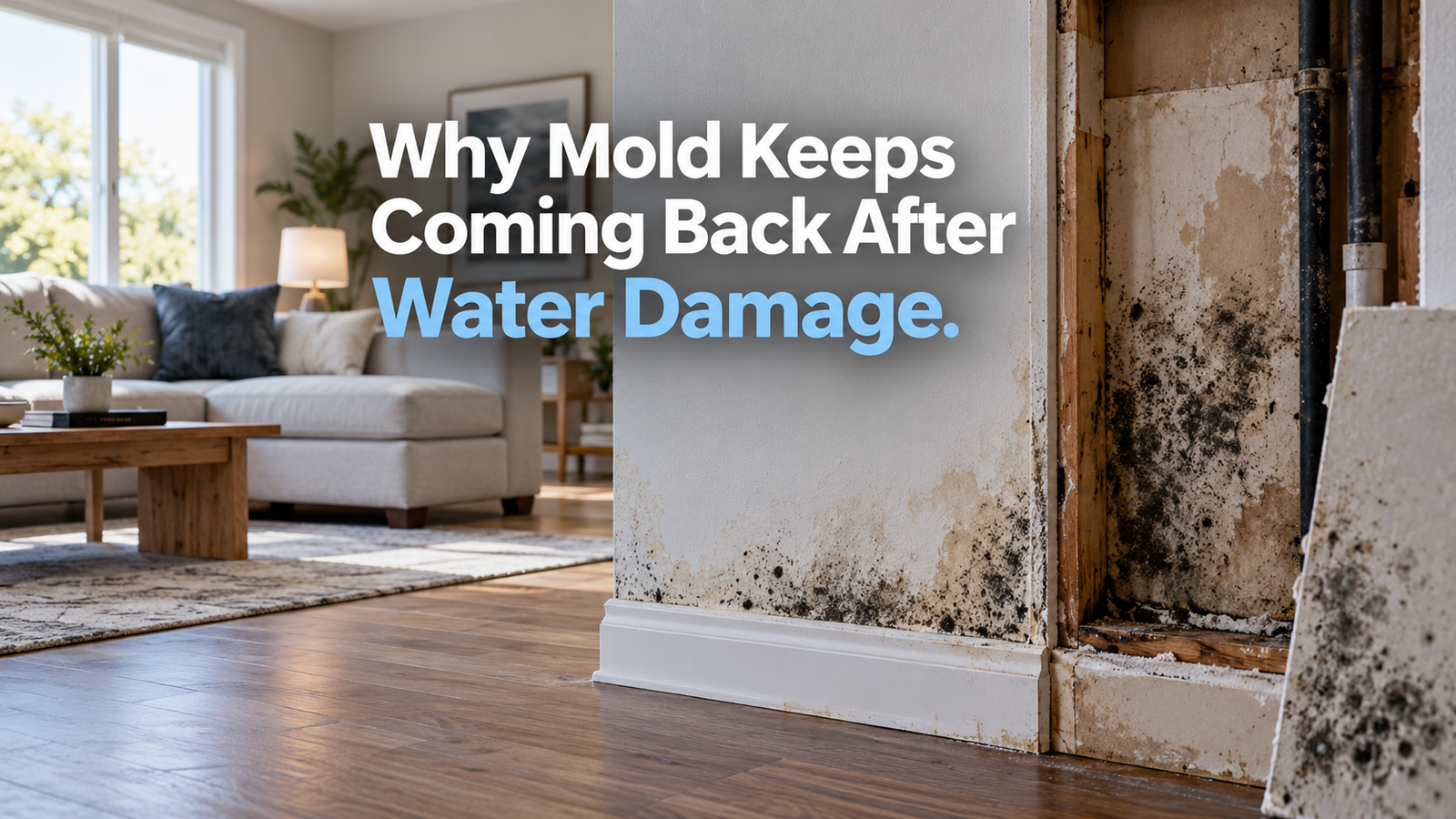
A house in Jupiter or Boca Raton that sat closed from May through October spent South Florida’s entire rainy season with nobody inside. Five months of afternoon storms and heavy, humid air, with one air conditioner doing all the work. Most homes come through it fine. Some greet their owners with a musty closet, a brown ring on the ceiling under the air handler, or grey-green spots on the backs of the dining chairs.
This seasonal home mold checklist covers what to check in your first hour back, what you can safely clean yourself, and when a stain or smell needs a professional. It is written for snowbirds and second-home owners in Palm Beach County, and it works just as well for landlords and property managers opening up a unit that sat vacant all summer.
Why a closed-up house grows mold over a Florida summer
Mold needs three things: moisture, something to feed on, and time. A vacant house supplies all of them. Drywall paper, wood, upholstery, leather, and the dust on top of furniture are food. Time is the months you were away. Moisture is the one you can control, and in an empty home it usually comes from one of these sources:
- The AC was turned off or set too high. In a shuttered house, the air conditioner is the only thing pulling humidity out of the air. Without it, indoor relative humidity climbs well above the 60% limit the EPA recommends, and mold can start on damp materials within 24 to 48 hours.
- The AC shut itself off. When algae clogs the condensate drain line, the float switch stops the system so the pan does not overflow. That protects the ceiling. It also leaves the house with no cooling and no dehumidifying for however many weeks it takes someone to notice.
- A slow leak. A weeping supply line under a sink, a toilet fill valve that never fully closes, an ice maker line, or a washing machine hose can drip for months in a house where nobody is listening.
- Storm water. Wind-driven rain finds its way past window seals, sliding door tracks, and roof flashing, especially when a tropical storm passes through.
- Still air. Shutters down, interior doors closed, and packed closets create pockets of humid air that never move. That is usually where growth shows up first.
The first 15 minutes: before you unpack
Do these before the suitcases come inside.
- Smell the house with the front door open. Your nose is sharpest in the first minute, before it adjusts. A heavy musty or earthy odor is the clearest early sign of trapped moisture or mold. Note which room it is strongest in.
- Read the thermostat. If the house is far warmer than the setting, the AC has stopped. Before resetting anything, open the air handler closet and look for water in the drain pan or a tripped float switch.
- Look up. Scan the ceilings for stains, sagging, or bubbled paint, especially below the air handler, bathrooms, and any upstairs plumbing.
- Look down. Check for cupped wood, swollen laminate, loose tile, or darkened grout near tubs, toilets, the dishwasher, and the water heater.
- Turn the water back on slowly. If you shut off the main before you left, open it and listen. A hiss with every fixture closed, or a water meter that keeps moving, means there is a leak somewhere.
If you see growth on the air handler, the return grille, or the supply vents, or the musty smell is strongest when air comes out of the vents, leave the system off and have it inspected. The EPA advises against running an HVAC system that you know or suspect is contaminated with mold, because it can carry spores into every room. Our article on how mold spores travel through your home’s HVAC system explains how that happens.
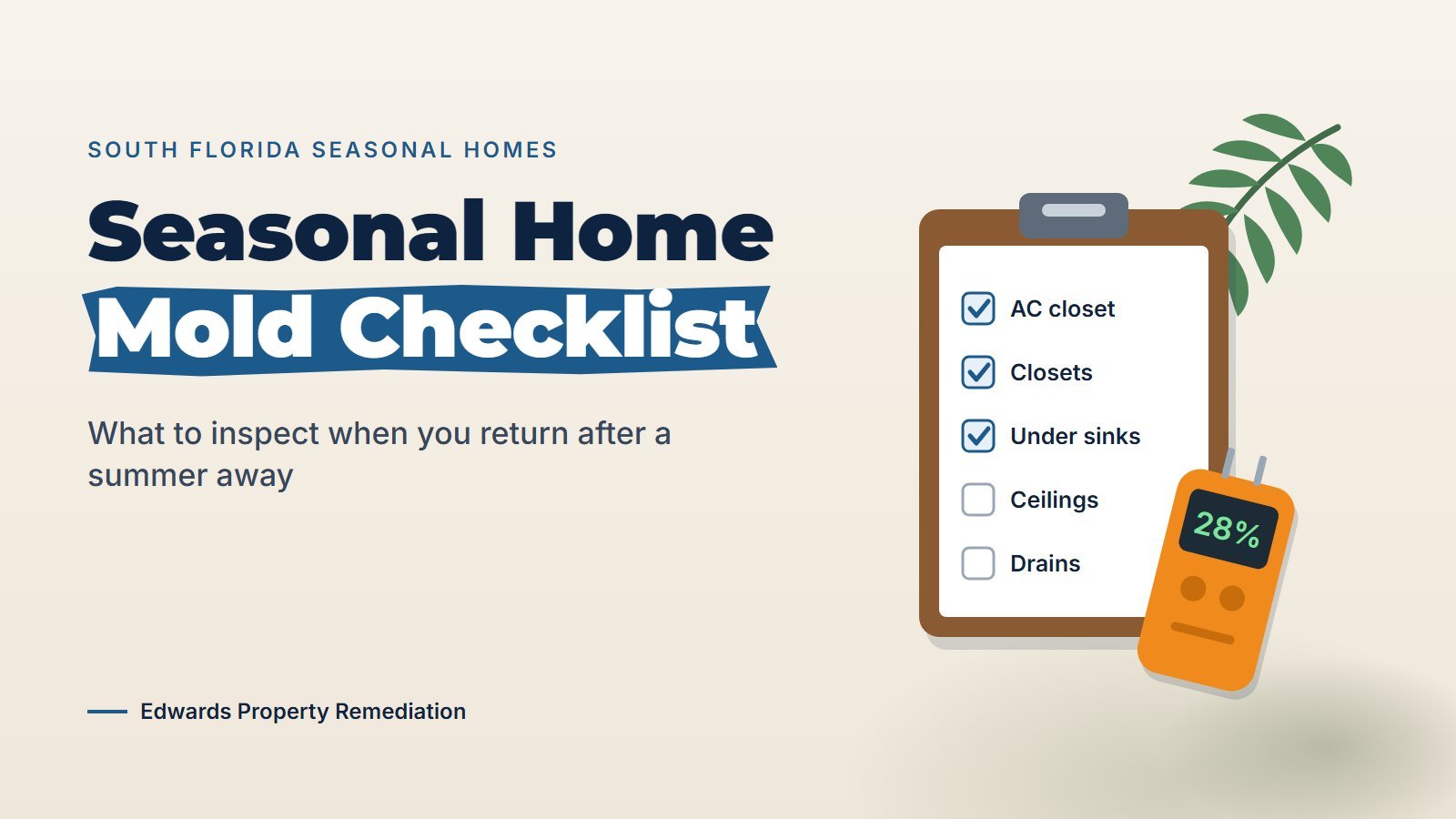
Room-by-room checklist
Air handler closet
- Water in the secondary drain pan, or rust lines showing it has held water
- Damp, stained, or soft drywall on the closet walls and on the ceiling below the unit
- Dark growth on the return grille, the filter, or the cabinet panels
- A filter that is grey or bowed. Replace it before running the system for long stretches.
For the full list of ways an AC system can soak a house, see How AC Leaks Cause Water Damage in South Florida Homes.
Closets and bedrooms
Nothing moves the air inside a closed closet all summer, which is why closets are often the first place seasonal home mold appears. Check:
- Leather shoes, belts, handbags, and jackets for white or green fuzz
- The back wall and baseboard behind hanging clothes, especially on exterior walls
- Mattresses and upholstered headboards for spotting or a damp smell
- Wicker, rattan, and unfinished wood furniture
Kitchen
- The cabinet floor under the sink, including behind whatever is stored there
- The refrigerator’s ice maker line and the floor in front of the fridge
- The flooring around the dishwasher toe-kick for swelling or stains
- The inside of the refrigerator, if it was switched off with the door shut
Bathrooms and laundry
- Caulk and grout lines around tubs and showers
- The floor at the base of each toilet. Rock the toilet gently; it should not move.
- Washing machine hoses for bulges or cracks, and the wall behind the machine
- The water heater base and pan for rust, scale, or standing water
Windows, sliders, and exterior walls
- Window sills and the drywall below them for stains or soft spots
- Sliding door tracks and the flooring just inside them
- Baseboards along exterior walls, particularly if a tropical storm came through while you were away
Musty smell or sewer smell? They have different causes
Not every bad smell in a closed-up house is mold. A drain that goes unused all summer can lose the water in its P-trap to evaporation. Without that water seal, sewer gas drifts up from the pipe and the room smells like rotten eggs, usually worst in a guest bathroom or the laundry room. Run water in every sink, tub, and shower for a minute and flush each toilet. If the smell fades within a few hours, dry traps were the cause.
A musty, earthy, damp-cellar smell is a different problem. It does not go away after you run the taps. It tends to be strongest inside closets, near the air handler, or along one wall, and it usually means something is wet or growing where you cannot see it.
What you can clean yourself, and when to stop
The EPA’s guidance for homeowners is that a moldy area smaller than about 10 square feet, roughly a 3-by-3-foot patch, is usually a reasonable do-it-yourself job, as long as the moisture source has been fixed and nobody in the house has asthma, allergies, or a weakened immune system. For small areas on hard surfaces:
- Wear an N-95 respirator, gloves, and goggles
- Scrub with detergent and water, then dry the surface completely
- Bag and throw away moldy items that cannot be cleaned, such as ceiling tiles, carpet padding, and cardboard boxes
- Never mix bleach with ammonia or other cleaning products
Stop and call a professional when:
- Growth covers more than about 10 square feet, or shows up in several rooms
- Drywall is soft, stained from behind, or the paint is bubbling, which usually means the wall cavity is wet
- The musty smell is still there after you have cleaned everything you can see
- The air handler, ductwork, or vents are involved
- The water came from a toilet overflow, a sewage backup, or outdoor flooding
- Someone in the household has breathing or allergy symptoms that ease when they leave the house
Scrubbing the visible spots does not dry the wall behind them. If the moisture is still there, the growth comes back, which is the pattern we describe in Why Mold Keeps Coming Back After Water Damage.
How Edwards Property Remediation inspects a seasonal home
When a returning owner calls us about a musty smell or a new stain, the visit usually goes in this order:
- Walkthrough and history. We ask when the house was closed, how the AC and water were left, and whether anyone checked on it while you were away. The answers narrow down where to look.
- Moisture mapping. Moisture meters and thermal imaging find wet drywall, subfloor, and cabinetry that look dry from the outside.
- Mold testing when it is warranted. Air or surface sampling is most useful when there is an odor with no visible source, or when you need a documented baseline for an insurer or tenant.
- Containment and mold remediation. Affected areas are sealed off under negative air pressure so cleanup does not push spores into clean rooms. Porous materials that cannot be cleaned are removed.
- Structural drying. Wall cavities, subfloors, and cabinets are dried to documented moisture levels so the problem does not return the next time the humidity climbs.
- Documentation. Photos, moisture readings, and scope notes go into a file you can share with your insurance company or property manager. Our insurance-ready water damage documentation page explains what that file includes.
If lingering odors or air quality are the main concern after cleanup, our indoor air quality control service deals with that next.
Set the house up before you leave next spring
Most of the problems above are cheaper to prevent than to fix. Before you close the house again:
- Keep the AC running. Set it in the high 70s to low 80s rather than turning it off. A thermostat with humidity control, or a whole-home dehumidifier, lets you hold indoor humidity below 60% directly instead of guessing with temperature.
- Service the AC before you go. Have the condensate line flushed and treated, the float switch tested, and the filter changed.
- Shut off the main water supply and set the water heater to vacation mode or turn it off.
- Put leak sensors under the sinks, behind the washer, beside the water heater, and in the air handler pan. Wi-Fi models send an alert to your phone wherever you are.
- Leave interior and closet doors open so conditioned air reaches every room, and pull furniture a few inches away from exterior walls.
- Arrange regular check-ins. A home watch service, a trusted neighbor, or your property manager walking through every week or two will catch a tripped AC or a dripping valve before it turns into a remediation job.
- Empty the refrigerator if you plan to switch it off, and prop the door open.
Frequently asked questions
How long does it take mold to grow in a closed-up Florida house?
Mold can begin growing on damp materials within 24 to 48 hours. In a vacant home, the clock starts when the moisture starts. If the AC failed in July, there can be visible growth by the time you return in the fall.
Should I turn the AC on as soon as I get back?
If there is no visible growth on the air handler or vents and the smell is mild, yes. Put in a fresh filter and run the system to start pulling humidity down. If you can see growth on the unit, the grilles, or the vents, or the odor is strongest at the vents, leave it off until it has been inspected.
Is a musty smell always mold?
Not always. Dry drain traps cause sewer odors, and any closed house can smell stale for a day. A musty, earthy smell that is still there after airing the house out and running the taps usually points to moisture or microbial growth somewhere.
Do I need mold testing if I can already see the mold?
Not always. Visible growth needs to be cleaned or remediated either way. Testing helps most when there is an odor with no visible source, when you need a baseline for a tenant or an insurance claim, or to confirm an area is clean after remediation.
Does homeowners insurance cover mold in a seasonal home?
It depends on the policy, the cause of the moisture, and how long the home was unoccupied. Some policies limit coverage for mold or for homes left empty for long periods. Read your policy, call your agent, and photograph conditions as you found them before anything is moved or cleaned. Our article on insurance policies and mold coverage covers the common questions.
Back in town and something smells off?
Edwards Property Remediation works with homeowners and property managers across Palm Beach County, including West Palm Beach, Jupiter, Boca Raton, Delray Beach, Boynton Beach, Lake Worth, and Greenacres. If your first walk through the house turned up a stain, a soft wall, or a smell that will not clear, call (754) 221-6945, email info@eprllc.net, or book an appointment online.