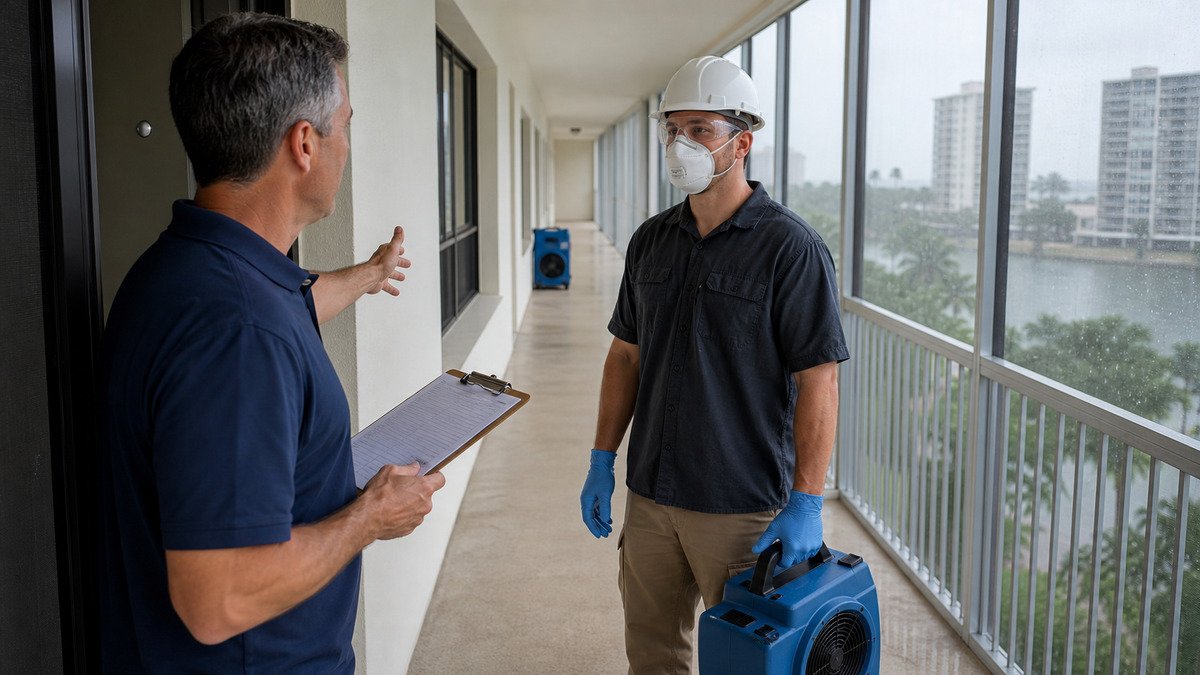
Living with structural drying equipment is easier and safer when occupants follow the project-specific access plan: keep children and pets away, leave machines and cords where the restoration team placed them, use approved walking routes, and report alarms, shutoffs, leaks, or loss of power promptly. Drying equipment may change room noise, airflow, and warmth, but conditions vary by property and no fixed comfort or completion promise applies. Edwards Property Remediation can explain the daily-use rules and monitoring schedule for its installed equipment.
Get the daily access plan in writing
Before the crew leaves, identify which rooms are open, restricted, or available only during a monitoring visit. Ask which entrance occupants should use, where shoes and personal items can be placed, and whether any bathroom, kitchen, bedroom, office, or storage area will be unavailable. A simple room-by-room plan prevents people from stepping over hoses or entering a controlled work zone because they assumed a familiar route was still usable.
Confirm who can enter the property for monitoring and who must be present to provide access. If the household or business operates on a schedule, share quiet periods, locked-room procedures, and essential access needs without asking the team to compromise equipment placement. Keep the restoration contact number visible and make sure every occupant, tenant, employee, cleaner, or caregiver receives the same current instructions.
- Mark approved routes and restricted rooms
- Confirm entry arrangements for monitoring visits
- Tell regular visitors and service workers about changed access
- Post the restoration contact and after-hours reporting method
Treat cords, plugs, and circuits as part of the setup
Drying machines require planned power connections. Do not add extension cords, power strips, adapters, or unrelated appliances to the circuits serving the equipment. Never unplug a machine to charge a device or create a temporary walkway. Keep liquids, fabrics, toys, boxes, and cleaning supplies away from plugs, cords, air inlets, and outlets. If a cord becomes warm, damaged, wet, loose, or pinched, keep clear and report it instead of attempting a repair.
Ask which breakers or outlets are assigned to the drying setup and what to do if a breaker trips. Do not repeatedly reset a breaker or enter a wet electrical area. Sparking, smoke, a burning odor, shock, or another immediate electrical danger calls for leaving the area and contacting the appropriate emergency or electrical professional. The restoration provider manages its equipment; electrical-system diagnosis belongs to a qualified electrician or utility as applicable.
Expect changed noise, airflow, and room warmth
Air movers and dehumidification equipment can make a room sound and feel different. Noise, moving air, and additional warmth may be noticeable, especially near the equipment or in a smaller area. The degree varies with the building, machines, weather, and plan, so occupants should ask what conditions are expected for their specific setup rather than rely on a generic temperature, sound level, or duration promise.
Do not cover a machine, close a vent, block an intake, redirect airflow, or open exterior doors and windows to change comfort without project guidance. Those changes can interfere with the planned environment or create a hazard. If noise or warmth makes sleep, work, medication storage, pets, electronics, or another essential activity difficult, tell the project contact promptly so practical options and scope limits can be discussed.
Leave equipment, doors, and barriers as positioned
The crew places equipment to support a site-specific drying plan and safe access. Moving a unit a few feet, turning it toward a doorway, or shutting it off for a meeting can change airflow and operating time. Do not move hoses, floor protection, plastic barriers, filters, or marked materials. If something blocks a required route, call the project contact and wait for a coordinated adjustment instead of making space yourself.
Doors may be intentionally open, closed, or managed as part of the work area. Ask which position applies to each door and how occupants should pass through when authorized. Do not open containment to look inside, allow a pet through, or retrieve an item. Report tears, loose edges, fallen signs, or a door that will not remain in its assigned position so the team can evaluate the setup.
Plan around children, pets, and visitors
Children should not play near machines, cords, hoses, barriers, or removed materials. Use a secure boundary that does not rely on a young child understanding a warning sign. Pet gates may not be adequate if a determined animal can reach equipment or containment, so arrange a closed safe room or off-site care when necessary. Keep bowls, bedding, toys, and litter away from the equipment path.
Tell guests, delivery workers, cleaners, maintenance staff, and other vendors which entrance and route to use. A person unfamiliar with the project may move a cord or unplug equipment while trying to help. If a visitor requires mobility assistance or another accommodation, coordinate access with the property and restoration contacts before arrival rather than improvising across a restricted area.
Know what changes require an immediate report
Call the restoration contact if a machine stops, displays an alarm, moves, leaks, smells unusual, or produces a new sound; if a breaker trips; or if someone disconnects power. Also report new water, expanding staining, fallen materials, a damaged barrier, or a newly blocked route. Do not wait for the next scheduled visit when the change could affect equipment, moisture conditions, or occupant access.
For smoke, fire, sparking, electrical shock, a major active leak, ceiling collapse risk, or another immediate danger, leave the affected area and use the appropriate emergency channel. A restoration company should not be treated as a substitute for emergency responders, utilities, electricians, structural professionals, or other specialists. Once people are safe, notify the restoration contact about the interruption and follow the project-specific reentry instructions.
Make monitoring visits easy to complete
Monitoring visits let the team review relevant conditions and adjust the plan when appropriate. Confirm the visit window, access contact, parking or gate details, alarm instructions, and rooms requiring keys or escorts. Keep equipment paths clear without moving the equipment itself. If the property will be vacant, arrange authorized entry rather than asking a neighbor or employee to make technical decisions on the crew’s behalf.
During the visit, ask what changed, what remained consistent, which spaces still have restrictions, and when the next check is expected. Do not interpret a single reading or dry-feeling surface as project completion. Equipment removal and drying decisions should be based on the materials, observations, and documented plan. If source repairs or reconstruction remain pending, record those as separate responsibilities.
Keep a short occupant question log
Use a simple dated note for occupant questions, equipment interruptions, access changes, and instructions received. Photograph an alarm or changed condition only from a safe position, then report it; do not open a machine or barrier to investigate. Consolidating routine questions through one household or business contact reduces conflicting requests and gives the restoration team a clearer operating history.
Edwards Property Remediation offers advanced structural drying and water damage restoration services, but occupant instructions belong to the installed setup at the property. Ask for clear boundaries, power precautions, monitoring expectations, after-hours contacts, and the process for reporting comfort or access problems. Following that plan helps occupants live or work around the project without trying to manage the drying process themselves.
Related resources
- Review the monitored drying service for moisture retained in materials — Advanced Structural Drying Services.
- See how equipment management fits the broader property recovery plan — Water Damage Restoration.
- Understand the earlier bulk water removal phase before drying begins — Emergency Water Extraction Services.
Frequently asked questions
Can someone sleep or work in a room next to the equipment?
That depends on the approved boundaries, access route, noise, warmth, and individual needs. Raise the question before setup so the project contact can explain room-specific restrictions.
What if everyone must leave the property overnight?
Arrange authorized entry, alarm or gate instructions, an emergency contact, and pet plans. Confirm how the crew will communicate monitoring times or an unexpected equipment issue.
May I sweep or mop near the drying setup?
First confirm the permitted cleaning area and method. Liquids, tools, and vacuum cords should stay away from machines, electrical connections, barriers, and affected materials.
Should plants, electronics, or temperature-sensitive items be moved?
Identify them before installation and request handling guidance. Move only items the team says are safe to relocate, using an approved route and documented destination.
What happens after a neighborhood power outage?
Once immediate electrical safety is addressed, notify the restoration team even if power returns. The team can check equipment status and determine whether the plan or monitoring schedule changes.
Take the next step with Edwards Property Remediation
Occupants needing help with drying setup can select Contact.