Air conditioning is essential for comfort in South Florida, but it can also become one of the most common sources of hidden water damage. When an AC system develops a leak, the moisture often goes unnoticed until it has soaked into walls, ceilings, flooring, or insulation. In a climate where humidity already runs high, these leaks can quickly lead to mold growth, structural problems, and costly repairs.
EPR (Environmental Pro Restoration) has restored hundreds of homes affected by AC-related water damage across Broward, Palm Beach, and Miami-Dade counties. Our experience shows that early detection and professional remediation are the most effective ways to limit damage and protect indoor air quality. This article explains how AC leaks cause water damage, the warning signs to watch for, and how proper restoration prevents long-term problems.
Why AC Leaks Are So Common in South Florida
South Florida’s climate places heavy demands on air conditioning systems. Units often run for long hours, especially during the hot and humid summer months. Several factors increase the likelihood of leaks:
- Condensate drain lines that become clogged with algae, dirt, or debris
- Overflowing condensate pans due to blocked drains
- Cracked or disconnected drain lines
- Frozen evaporator coils that later thaw and release large amounts of water
- Poorly maintained systems with dirty filters that restrict airflow
- Aging equipment that develops corrosion or seal failures
When any of these issues occur, water can escape the system and enter surrounding building materials.
How AC Leaks Lead to Water Damage
Water from an AC leak rarely stays confined to the unit itself. Once it leaves the drain system or pan, it can:
- Soak into drywall and ceiling materials
- Travel along framing and into wall cavities
- Saturate insulation, reducing its effectiveness
- Reach flooring and subfloors
- Enter the HVAC ductwork and spread moisture throughout the home
Because much of this damage occurs out of sight, homeowners often do not realize there is a problem until stains, musty odors, or soft materials appear.
Common Signs of AC-Related Water Damage
Watch for these warning signs:
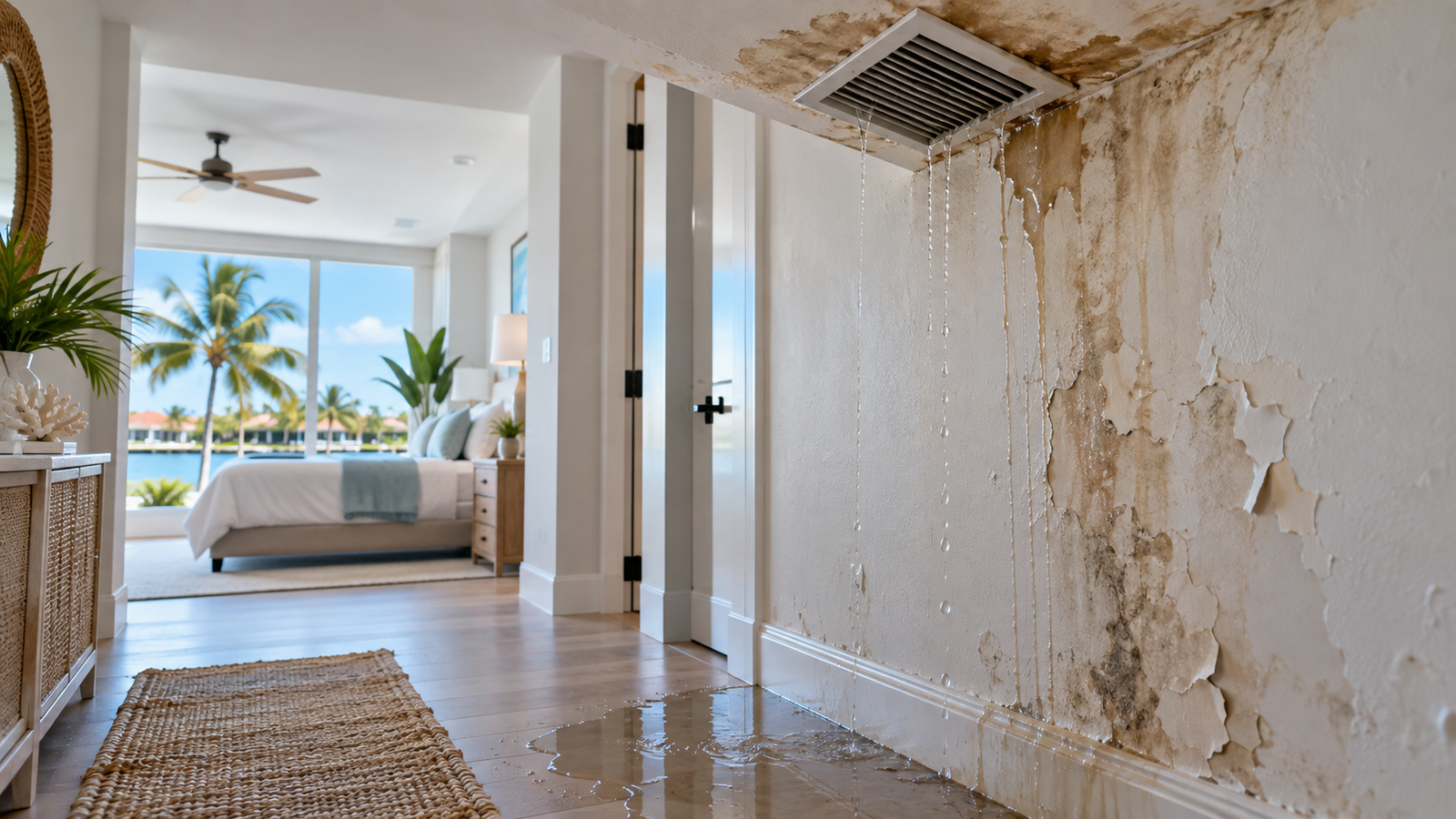
- Water stains on ceilings or walls near air handlers or vents
- Musty or earthy odors when the AC is running
- Soft or discolored drywall
- Excess moisture or condensation around the air handler
- Higher than normal indoor humidity
- Unexplained increases in allergy or respiratory symptoms
- Visible mold growth near vents or on nearby surfaces
- Water pooling near the indoor unit or in the attic
Any of these symptoms should prompt a professional inspection.
The Health and Structural Risks of Ignoring AC Leaks
Left untreated, AC leaks create ideal conditions for mold growth. In Florida’s humidity, mold can begin developing within 24–48 hours. Ongoing moisture can also:
- Weaken drywall and wood framing
- Damage insulation and reduce energy efficiency
- Contaminate indoor air through the HVAC system
- Lead to more extensive and expensive repairs over time
The longer the moisture remains, the greater the potential impact on both the home and the health of its occupants.
How EPR Addresses AC Leak Water Damage
EPR follows a thorough, professional process designed to stop the damage and restore the home safely:
1. Rapid Assessment and Moisture Mapping
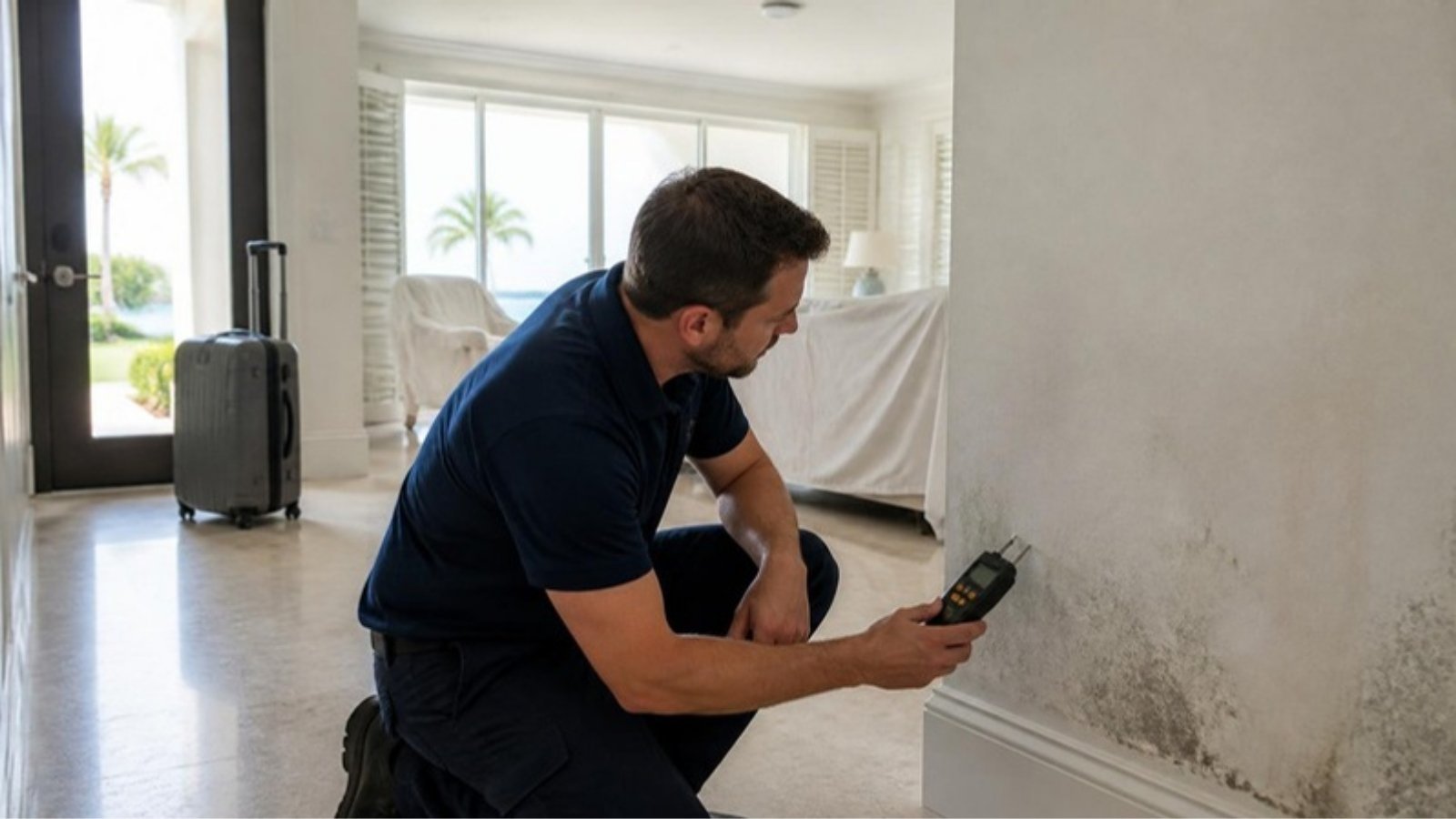
We use thermal imaging and moisture meters to locate all affected areas, including hidden moisture inside walls and ceilings.
2. Source Identification and Coordination
While we focus on water damage restoration, we help identify the AC issue so it can be properly repaired by a qualified technician.
3. Water Extraction and Controlled Drying
Industrial equipment removes standing water and dries structural materials to safe, documented levels.
4. Removal of Contaminated Materials
Porous materials that cannot be effectively cleaned and dried are removed under proper containment.
5. Antimicrobial Treatment and Cleaning
Remaining surfaces are treated to reduce microbial growth.
6. HVAC System Consideration
When appropriate, we address contamination that may have entered the air handling system.
7. Post-Remediation Verification
Independent testing confirms that moisture and microbial levels have returned to normal ranges.
This comprehensive approach helps ensure the problem does not return.
Why Professional Restoration Matters More in Florida
Florida’s high humidity slows natural drying and accelerates mold growth. DIY efforts or incomplete drying frequently leave residual moisture that allows problems to reappear. Professional equipment, monitoring, and verification provide a more reliable path to full recovery.
Prevention Tips for Homeowners
- Change AC filters regularly
- Have the system professionally maintained at least once a year
- Keep condensate drain lines clear
- Monitor the area around the air handler for signs of moisture
- Address any unusual odors or stains promptly
- Consider a condensate overflow switch that shuts the system off if the pan fills
These simple steps can significantly reduce the risk of AC-related water damage.
Frequently Asked Questions
How can I tell if my water damage is from the AC?
Stains or moisture near the air handler, vents, or condensate line are strong indicators. A professional inspection can confirm the source.
Can AC leaks cause mold even if I don’t see standing water?
Yes. Small, ongoing leaks often create enough moisture for mold growth without producing visible pooling.
Will my insurance cover AC leak damage?
Coverage depends on the specific policy and the cause of the leak. Sudden and accidental damage is more likely to be covered than damage from long-term lack of maintenance. EPR can help with documentation.
How long does restoration take after an AC leak?
Most projects are completed in a few days to two weeks, depending on the extent of the moisture and materials affected.
Should I turn off the AC if I suspect a leak?
If water is actively leaking, it is often wise to turn the system off and call for service to prevent further damage. A qualified technician can advise on the safest next steps.
Protect Your Home from AC-Related Water Damage
Air conditioning keeps South Florida homes comfortable, but leaks can quietly cause significant water damage and mold problems. Recognizing the warning signs and responding quickly with professional help is the best way to limit costs and protect indoor air quality.
If you suspect an AC leak or have noticed signs of water damage, do not wait for the problem to spread.
Call +1 (754) 221-6945 or email info@eprllc.net today for a professional assessment or 24/7 emergency response.
Visit EPR LLC or connect with us on Facebook for real case studies and helpful resources.
Trust EPR to locate the damage, dry your home thoroughly, and help restore a safe, healthy environment.