South Florida condo water damage often crosses unit boundaries, shared plumbing, corridors, exterior assemblies, or building systems, so the safest response combines source control, restricted access, prompt documentation, and clear coordination among the unit owner, occupants, association or property manager, restoration team, insurer, and appropriate trades. Do not assume responsibility or coverage from the leak location alone. Edwards Property Remediation serves Palm Beach County communities and can assess water restoration needs within the affected property and its authorized access.
Treat vertical and shared-building risks seriously
Water in a condo may travel downward, sideways, or along openings before it becomes visible. Check for reports from units above, below, and beside the apparent source, but do not enter another unit without authorization. Wet electrical devices, elevator areas, fire-protection components, sagging ceilings, and slippery common corridors require immediate restriction and referral to the appropriate building, utility, emergency, or trade professional.
If a shutoff is dry, safely accessible, and within your authority, stopping an ordinary supply flow may limit additional damage. Do not cross standing water or enter a mechanical, roof, riser, or electrical area to reach controls. Notify the building contact promptly because a shared valve or system may require authorized personnel. Record who was called, when contact occurred, and what source-control action was confirmed.
- Keep people away from water, wet electrical areas, and unstable finishes
- Notify the association or building contact using the established process
- Identify affected neighboring units without unauthorized entry
- Document observations without assigning responsibility
Create a shared but factual event timeline
Record when each unit or common area was last known dry, when water was discovered, and when the source was isolated. Attribute reports to the person who made them and keep suspected causes separate from confirmed findings. A stain below one unit does not, by itself, decide where a component failed or who is responsible. Preserve maintenance requests, building notices, repair records, and original photographs.
Choose one coordination contact for the unit and ask who holds that role for the association or property manager. Share relevant restoration updates without circulating private tenant or owner information unnecessarily. If accounts conflict, preserve them and let the appropriate qualified parties investigate. A reliable timeline can support restoration and insurance communication while avoiding unsupported legal or coverage conclusions.
Clarify access before the restoration visit
Condo response can stall when the source unit, affected lower unit, riser room, parking area, or service entrance is unavailable. Confirm gate procedures, elevator rules, parking or loading restrictions, working hours, and who can authorize access to common elements. If an area cannot be entered, note the limitation and schedule the responsible contact rather than representing the unseen area as unaffected.
Tell the restoration team which rooms are occupied, where pets are located, and whether tenants or seasonal owners are away. Provide the safest available equipment route and protect unaffected access areas through the coordinated plan. Do not move wet contents into a corridor or neighboring room without approval and a handling strategy, since that may spread water or create an egress obstruction.
Separate restoration decisions from responsibility questions
Emergency extraction, moisture evaluation, drying, cleaning, and material decisions can proceed within authorized areas while insurers, association representatives, owners, or advisers address responsibility. The restoration scope should identify who authorized each area and which building components remain outside it. A service provider’s observation of water location should not be treated as a legal conclusion about ownership, maintenance duties, or coverage.
Review the condominium’s established reporting and access procedures and obtain policy or legal guidance from the appropriate sources. This article cannot determine duties for a particular building. Edwards Property Remediation can document the conditions it observes and the services it performs, helping the parties communicate from a shared restoration record without deciding matters beyond that role.
Account for South Florida weather and vacancy patterns
Warm, humid conditions and seasonal rain can complicate a condo water event, especially when a unit is vacant, climate control is interrupted, or exterior openings remain exposed. Weather context matters, but humidity alone does not diagnose mold or prove that a specific assembly is wet. Report air-conditioning interruptions, open windows, roof or façade work, and recent storms so the team can consider current site conditions.
Seasonal owners should maintain current emergency contacts, access authorization, and instructions for pets, valuables, and building notifications. Property contacts should avoid making invasive repairs or discarding materials before the conditions are documented, except where immediate safety requires action. Prompt access is useful, but safe entry and proper authority still come first.
Coordinate extraction and drying across boundaries
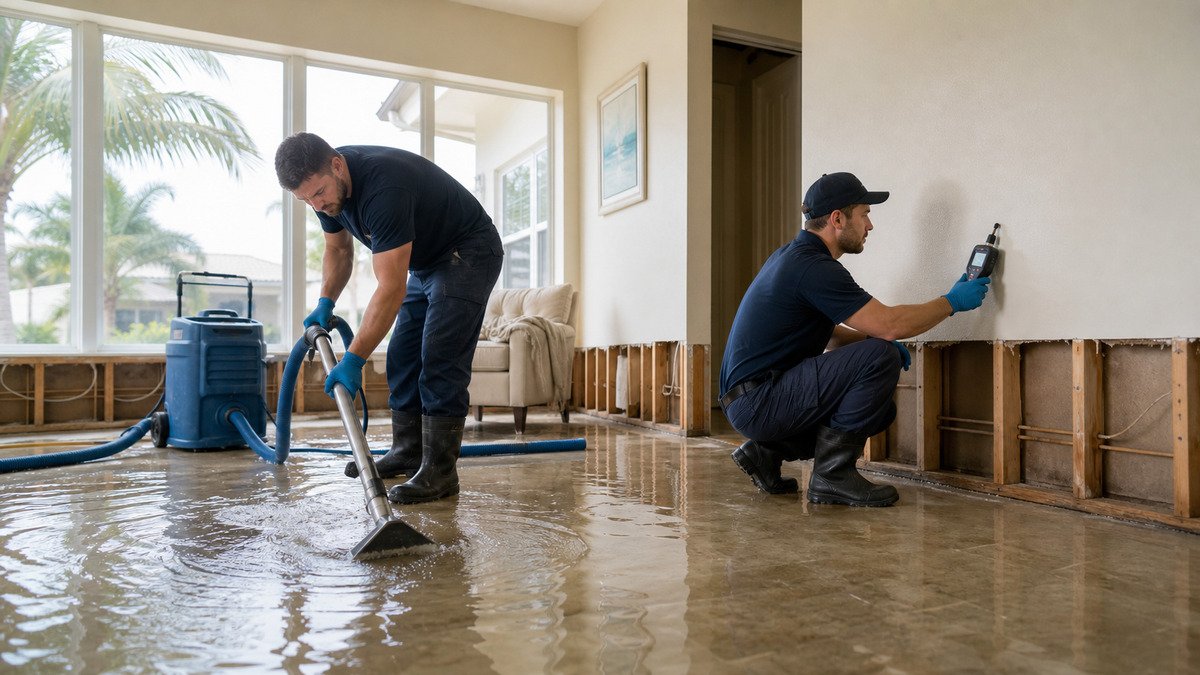
Removing visible water from one unit does not establish that the ceiling below, shared wall, flooring system, or adjacent unit is dry. A restoration assessment may need to consider accessible connected areas and material paths. Each entry requires authorization, and access limitations should be documented. Equipment placement also needs coordination so corridors, doors, elevators, and required exits remain managed appropriately.
Edwards Property Remediation offers emergency water extraction, water damage restoration, and advanced structural drying services. The selected combination depends on source, materials, migration, contamination concerns, access, and observed moisture conditions. Occupants should not move or switch off equipment without direction; loss of power, new leakage, odors, or changing stains should be reported promptly.
Build records for multiple parties and prepare the service call
Label records by building, unit, room, date, and project phase. Keep association notices, owner communications, tenant reports, source-repair invoices, restoration documents, and insurer instructions together but clearly attributed. Photographs should move from wide context to close detail and should never require entering an unsafe area. Note every inaccessible location rather than guessing about its condition.
Insurance-ready water damage documentation can organize restoration observations and work, but it does not promise claim payment or decide which policy responds. Each party should obtain guidance from its own insurer or qualified adviser. Confirm what Edwards Property Remediation will include in the project record, how scope changes will be documented, and how records for multiple units will be identified.
When requesting service, provide the condo address, building and unit numbers, source status, affected and neighboring areas, association contact, access constraints, occupancy, and known hazards. Identify whether the problem is active, whether another trade has responded, and which areas are authorized for inspection. Edwards Property Remediation has location pages for West Palm Beach, Boca Raton, Boynton Beach, Delray Beach, Greenacres, Jupiter, and Lake Worth, along with its restoration service pages.
A local page confirms geographic service context, not that every building or condition receives the same response. Ask the team to define the initial evaluation, work areas, safety and access instructions, documentation, exclusions, and next decision. Clear authority and a factual record help a condo water loss move forward without turning restoration observations into unsupported legal, insurance, structural, or health conclusions.
Related resources
- Review the broader recovery service for affected condo materials — Water Damage Restoration.
- Understand the urgent removal step when accessible water remains — Emergency Water Extraction Services.
- Prepare organized restoration records for multiple involved property parties — Insurance-Ready Water Damage Documentation.
- Confirm local service context for West Palm Beach properties — West Palm Beach, FL.
Frequently asked questions
What should a seasonal owner arrange before leaving South Florida?
Maintain current association and local contacts, lawful access instructions, insurer details, climate-control monitoring, pet or vehicle information, and a process for authorizing urgent property visits.
What if the association contact cannot be reached after hours?
Use the building’s documented emergency escalation process and address immediate danger through the proper emergency or utility channel. Record attempts and avoid unauthorized common-area work.
What if a neighboring unit owner does not respond?
Document contact attempts and follow association access procedures. Restoration can continue only in authorized areas; inaccessible connected spaces should remain clearly identified as unresolved.
Should a vacant unit’s air conditioning stay on?
Avoid changing building systems without property-specific direction. Report the current operating status to management and the restoration team so qualified parties can coordinate the decision.
What should I send when requesting condo restoration service?
Send the address, building and unit, source status, affected levels, association contact, authorized access, current closures, original photos, prior vendor actions, and known hazards.
Take the next step with Edwards Property Remediation
South Florida condo stakeholders coordinating their next response can continue with Contact.