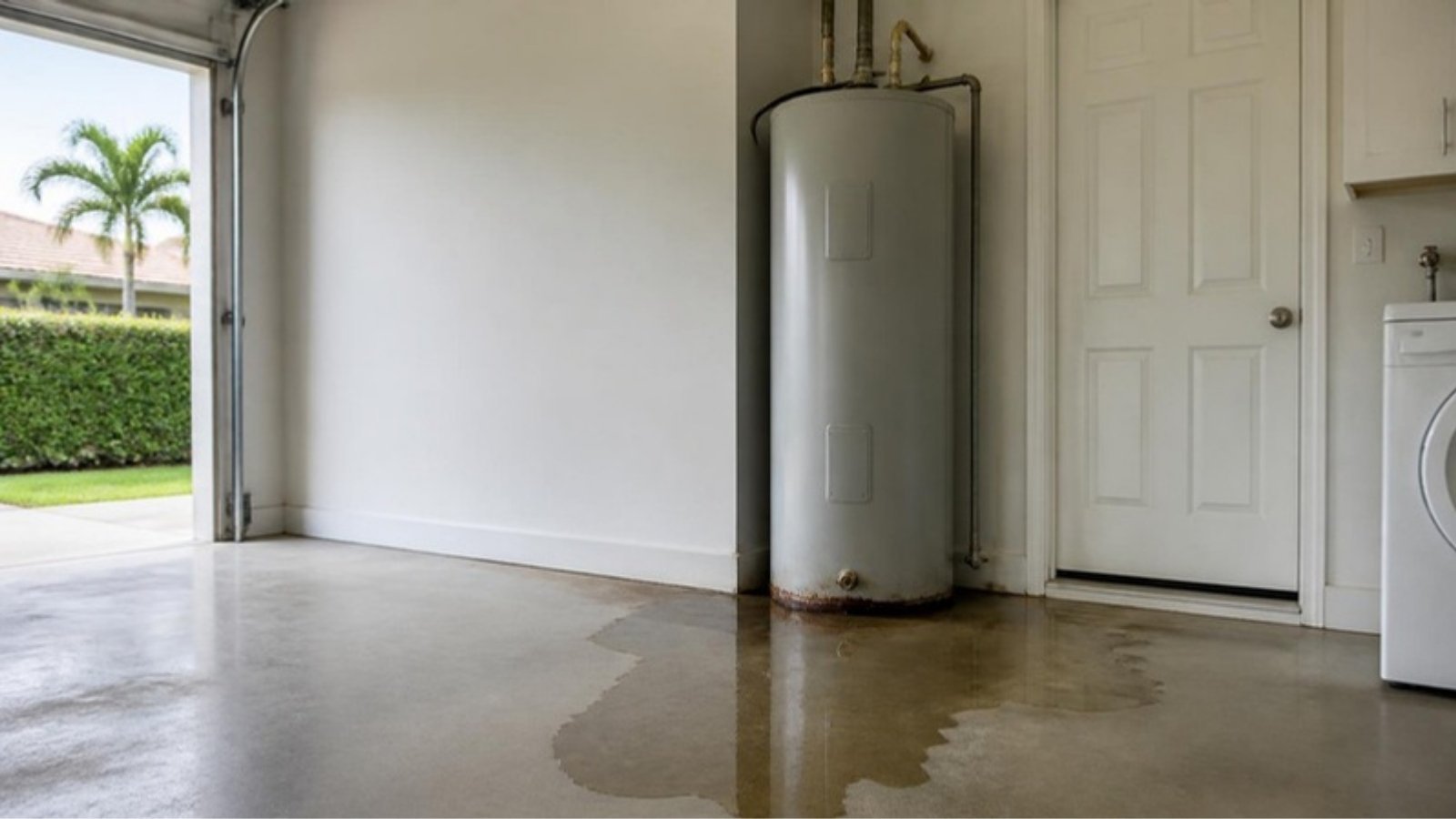
The washer in a Greenacres townhome starts a load while everyone is out for the afternoon. A rubber fill hose that has been behind the machine for years splits near the fitting, and the line keeps pushing water at full house pressure until somebody comes home. In a West Palm Beach condo, the thin plastic tube feeding the refrigerator’s ice maker cracks behind the fridge, and the first sign is a stain on the ceiling of the unit below.
Appliance supply line leaks start small. The lines are thin, they sit behind or under heavy appliances where nobody looks, and they connect to a water supply that never runs out. This article covers the weak points on washers, dishwashers, and refrigerators, the signs of a slow leak, what to do in the first few minutes, and the habits that help prevent the next one.
Washing machine hoses: rubber versus braided stainless
Most washers connect to the wall with two fill hoses, one hot and one cold. As long as the wall valves are open, those hoses stay under pressure around the clock, so they do not need the machine to be running to fail.
- Rubber hoses are the plain hoses that come in the box with many machines. Rubber hardens and cracks with age. Look for bulges, blisters, cracks near the ends, or a hose that feels stiff when you bend it.
- Braided stainless steel hoses have a rubber or plastic inner tube wrapped in a woven steel jacket. They resist bursting better than plain rubber, but they are not permanent. The crimped fittings at each end can corrode or loosen, and a braided hose that stays kinked can still fail.
Many washer manufacturers recommend replacing fill hoses about every five years, even if they look fine. Check the manual for your machine’s specific guidance. When you install new hoses, make sure they do not kink where they leave the wall, and leave a few inches between the back of the washer and the wall.
When the drain overflows instead
Not every washer leak comes from the fill side. The drain hose hooks into a standpipe in the wall or empties into a laundry sink. If the standpipe is clogged with lint, the hose is pushed too far down, or the hose jumps out during the spin cycle, the washer pumps its discharge water onto the floor. The IICRC classifies water discharged from a washing machine as Category 2, or gray water. It carries detergent and whatever came off the laundry, so carpet, pad, and other porous materials it soaks need more than drying. Our article on the three categories of water damage explains why the category changes the cleanup.
Dishwasher and ice maker connections
Dishwashers
A dishwasher has three common leak points. The supply line runs from a valve under the kitchen sink, through the cabinet, to an inlet valve behind the toe-kick panel at the bottom front of the machine. The drain hose runs back to the sink drain or garbage disposal. And the door gasket and the tub itself can leak during a cycle.
A slow drip at the inlet valve lands under the dishwasher, behind the toe-kick, where nobody can see it. From there it spreads under the neighboring cabinets and the flooring in front of the machine. By the time the toe-kick swells or the floor in front of the dishwasher lifts, the slab or subfloor underneath may have been wet for weeks.
Refrigerator ice maker and water dispenser lines
Refrigerators with an ice maker or water dispenser are fed by a small line, often a quarter-inch tube, that runs from a valve under the sink, in a nearby cabinet, or in the wall behind the fridge. Many installations use plastic tubing, which can become brittle and crack over time, especially at tight bends.
The weak points are the tube itself, the compression fittings at each end, and the connection at the water filter. Those fittings can loosen whenever the fridge is pulled out for cleaning and pushed back. Some older kitchens have a saddle valve clamped onto a copper pipe instead of a standard shut-off valve, and many plumbers prefer to replace those. A cracked line behind the fridge can drip for weeks before water shows at the front edge.
Signs of appliance supply line leaks
- A thin line of water, or a dried water mark, along the front edge of the refrigerator or dishwasher
- Laminate or wood flooring that cups, lifts at the seams, or feels soft in front of an appliance
- A swollen toe-kick or cabinet base next to the dishwasher
- Stains, warping, or a musty smell inside the sink base cabinet
- Water marks, bubbling paint, or a damp baseboard on the wall behind the washer
- Rust or mineral crust on the washer valves or hose ends
- An ice maker that suddenly makes smaller cubes or less ice, which can point to a supply problem
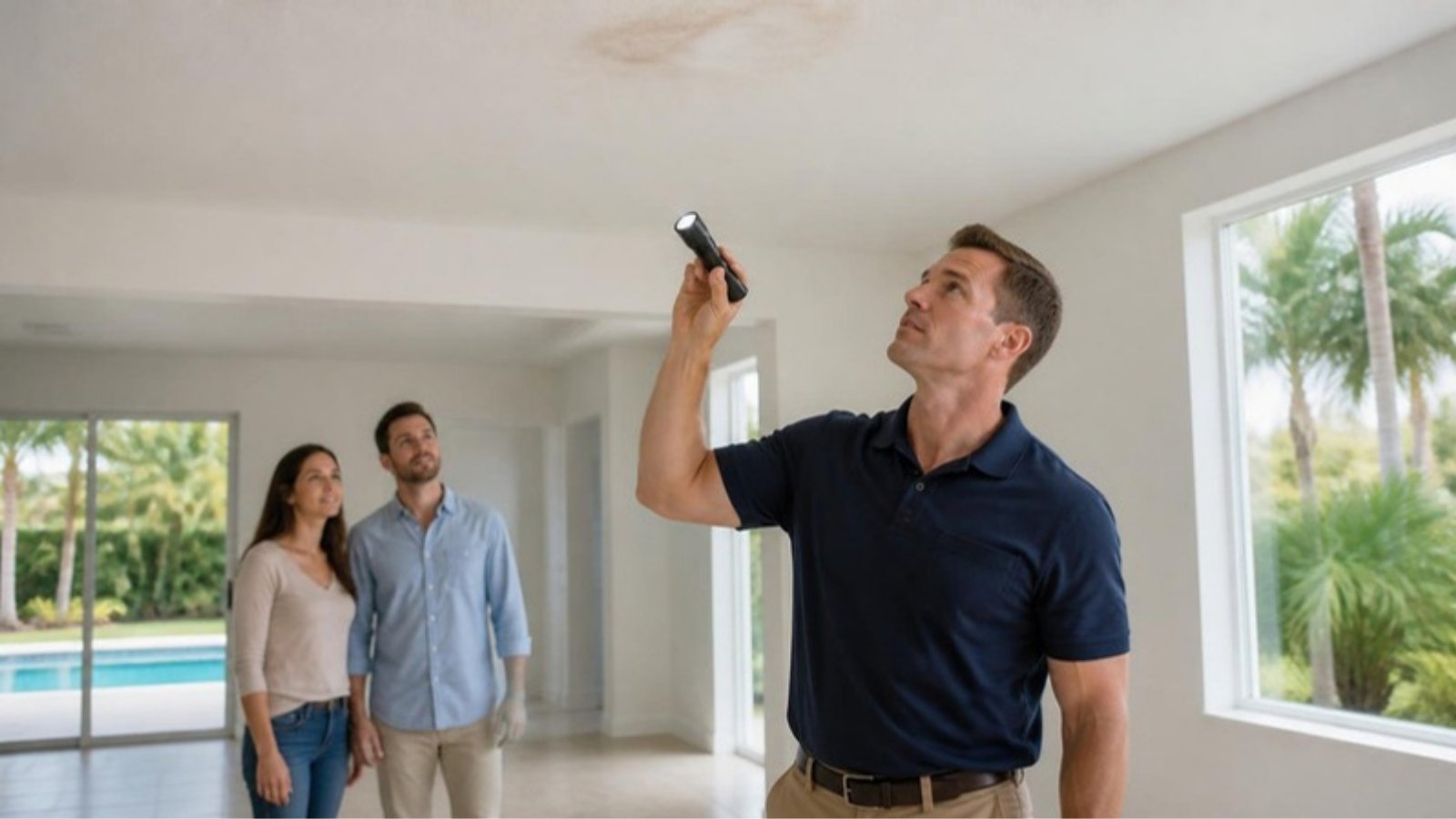
- A ceiling stain below an upstairs laundry room or kitchen, or in the condo unit below
Why the water goes farther than you think
A puddle in front of the washer is usually only the part of the problem you can see.
- Under cabinets. Kitchen and laundry cabinets sit on the floor with a hollow space behind the toe-kick. Water runs into that space, and the particleboard cabinet bottoms soak it up. Particleboard that swells rarely goes back to its original shape.
- Under laminate and floating floors. Laminate and many vinyl plank floors float over a thin underlayment. Water travels between the underlayment and the slab, well past where the puddle was, and swells laminate edges from below.
- Into the walls. Drywall wicks water upward from the floor. The baseboard may look fine while the drywall behind it is wet several inches up.
- Through the ceiling below. In two-story homes and condo buildings, water from an upstairs laundry or kitchen comes through the ceiling of the room or unit below.
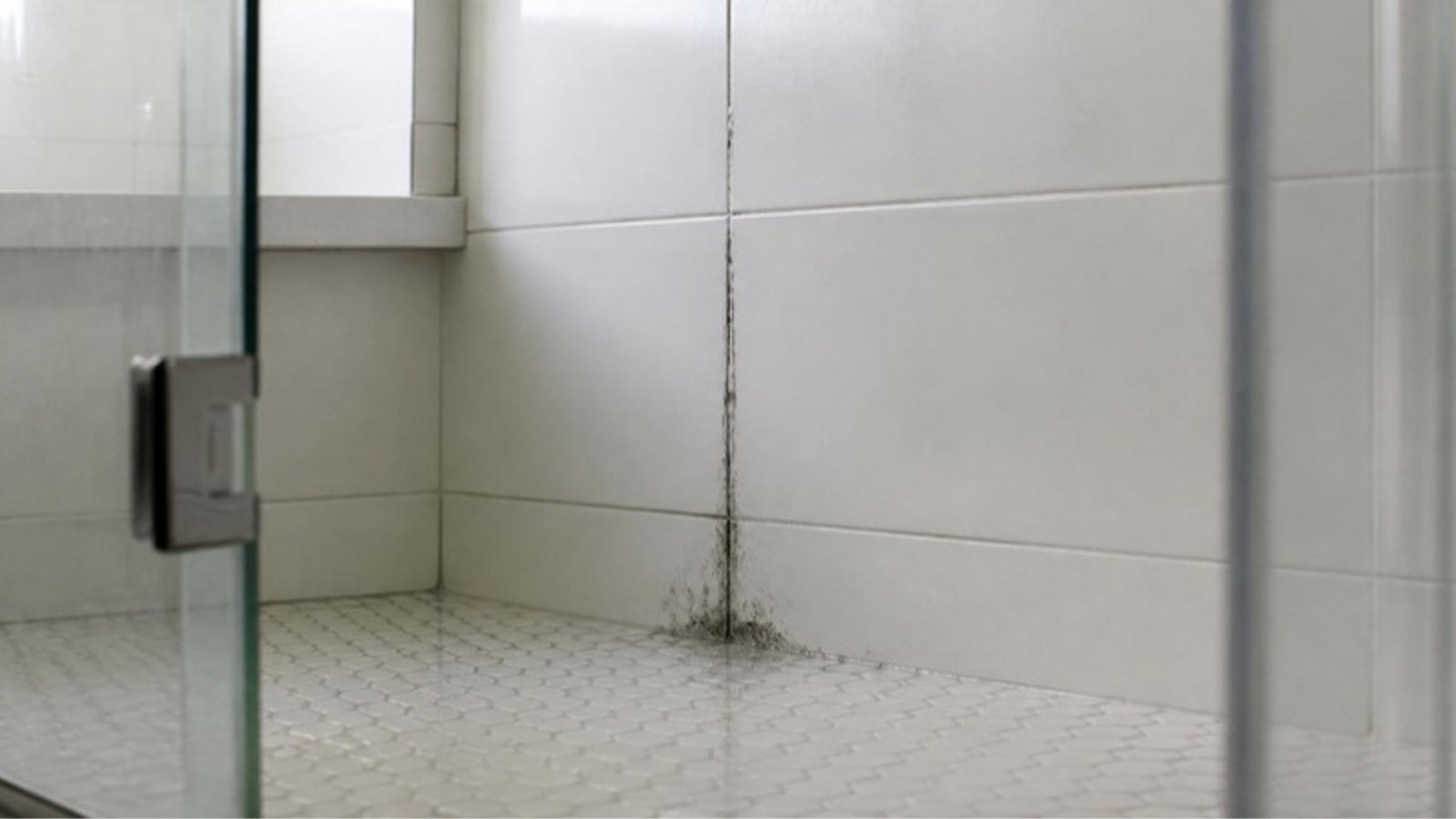
Drying the visible surface while water stays trapped underneath is how a simple leak turns into a mold problem. Mold can start growing on damp materials within 24 to 48 hours. Our article on how fast drying saves flooring, walls, and ceilings explains what can often be kept when water is caught early.
What to do first when an appliance line leaks
- Shut off the water at the appliance. Washer valves are usually in a recessed box in the wall behind the machine. Dishwasher supply valves are typically under the kitchen sink. Ice maker lines may have a valve under the sink, in a nearby cabinet, or behind the refrigerator. If you cannot find or close the right one, shut off the main valve to the house.
- Cut the power safely. If the outlet, cord, or plug is wet, or you would have to stand in water to reach it, leave it alone and switch off the breaker for that circuit at the panel instead.
- Photograph everything before cleanup. Get the failed hose or fitting, the water on the floor, the cabinets, the walls, and anything stored nearby. Keep the failed part, because your insurer or the manufacturer may want to see it.
- Pick up what you can. Towels and a wet/dry vacuum help with surface water. They do not reach under cabinets, beneath laminate, or into the bottom of the wall.
- Leave the appliance off until a plumber or appliance technician has repaired the line.
- Get wet materials checked. Wet carpet, laminate, baseboards, cabinets, or drywall should be checked with a moisture meter, not judged by touch.
How Edwards Property Remediation dries out an appliance leak
Our IICRC-certified technicians respond 24/7, and a typical appliance leak job goes in this order:
- Find the edges. We use moisture meters and thermal imaging to find every wet area, including under cabinets, beneath flooring, and in the rooms next door or below.
- Extract the water. Our emergency water extraction service removes standing water and pulls water out of carpet and pad.
- Clean what gray water touched. When the source was a washer or dishwasher drain, affected surfaces are cleaned and treated through our sanitization and disinfection service, and porous materials that cannot be cleaned are removed.
- Open what needs to dry. Toe-kicks may be pulled, cabinet bases opened, and laminate lifted where water is trapped underneath, so dry air can reach the wet materials.
- Dry the structure. Dehumidifiers and air movers run until readings show the materials are dry. That is the core of advanced structural drying.
- Document the loss. Photos, readings, and a written scope go into a file for your insurer, your landlord, or your condo association.
Landlords and property managers will find more in our article on the top causes of water damage in South Florida rentals.
Preventing appliance supply line leaks
- Replace washer hoses on a schedule and write the install date on a piece of tape on each hose.
- Leave space behind the washer so the hoses do not kink or get crushed against the wall.
- Turn off the washer valves when you travel, or any time you will be gone for more than a day or two.
- Install leak sensors on the floor behind the washer, under the kitchen sink, beside the dishwasher, and behind the refrigerator. Wi-Fi models send alerts to your phone.
- Ask a plumber about automatic shut-off valves. Some mount at the washer box, and whole-house systems close the main when a sensor detects water.
- Put the washer in a drain pan with a drain line if your laundry room is upstairs or in a condo.
- Do not run the washer or dishwasher while you are asleep or out of the house.
- Check the ice maker line any time the fridge is moved, and ask a plumber about replacing old plastic tubing with braided line.
- Keep the standpipe clear of lint, and make sure the drain hose is secured so it cannot pop out during the spin cycle.
Frequently asked questions
How often should washing machine hoses be replaced?
Many washer manufacturers recommend replacing fill hoses about every five years. Check your machine’s manual for its own guidance, and replace any hose sooner if it bulges, cracks, kinks, or shows rust or moisture at the fittings.
Are braided stainless steel hoses leak-proof?
No. They resist bursting better than plain rubber hoses, but the inner tube still ages, and the crimped fittings at each end can corrode or loosen. Inspect them and replace them on a schedule like any other hose.
Is water from a washing machine leak safe to clean up myself?
It depends on where the water came from. Water from a burst fill hose starts out clean, IICRC Category 1. Water from the washer’s drain or an overflow during a cycle is gray water, Category 2, because it carries detergent and soil from the laundry. Wear gloves, keep children and pets away, and have soaked carpet and other porous materials professionally cleaned or removed.
Can wet laminate flooring be saved?
Sometimes, if the water is extracted and dried quickly and the boards have not swollen. Laminate with a fiberboard core that has already swelled at the seams usually does not flatten again and has to be replaced. The slab or subfloor underneath still has to be dried either way.
Does insurance cover a burst washing machine hose?
It depends on your policy. Policies often treat sudden, accidental water damage differently from damage that built up from a slow leak over time. Read your policy, call your agent, keep the failed hose, and photograph the damage before cleanup starts.
Water under the washer, dishwasher, or fridge?
Edwards Property Remediation provides 24/7 emergency water extraction and drying across Palm Beach County, including Greenacres, West Palm Beach, Lake Worth, Delray Beach, and Jupiter. Call (754) 221-6945, email info@eprllc.net, or book an appointment online.