
Lake Worth, Florida
Mold Testing in Lake Worth, FL
Moisture checks plus air and surface samples sent to a laboratory, with a written report.
- Mold Remediator MRSR2591
- Mold Assessor MRSA3666
- IICRC Certified Firm
Quick answer
Mold testing in Lake Worth often involves older cottages and rentals, where an owner, a tenant or a manager wants an independent description of the conditions. We assess under Florida Mold Assessor license MRSA3666 and include the crawl space and attic where they can be reached. Because of Florida's 12-month rule, we do not remediate a property we have assessed.
A common request in Lake Worth is an assessment of a rented cottage after a tenant reports a smell or spotting on walls. The inspection covers the rooms, the crawl space under the floor, window areas and any flat roof sections, with moisture readings at each. Older houses often show several small moisture problems instead of one big one. The written report lists each, with photographs, so the owner can decide what to repair and a remediation company can scope the work.
Most people call about testing for one of three reasons: a smell with no visible source, a past leak they are not sure was dried, or a need for a result on paper for a sale, a lease or a claim. In South Florida's humidity, mold can grow in places nobody looks, such as behind baseboards, under sinks, above ceilings and around air handlers. A sample alone does not find those places. The inspection does, and it starts with moisture.
What the work covers
Visual inspection
A room-by-room look at the places moisture collects: under sinks, around windows, at ceilings below roofs and bathrooms, and at the air handler.
Moisture and humidity readings
Moisture meter readings on walls and floors and relative humidity readings in the rooms, all recorded in the report.
Air sampling
Indoor air samples collected with a sampling pump and compared with an outdoor sample taken the same day.
Surface sampling
Tape lift or swab samples taken from a stain or deposit to confirm whether it is mold.
Laboratory analysis
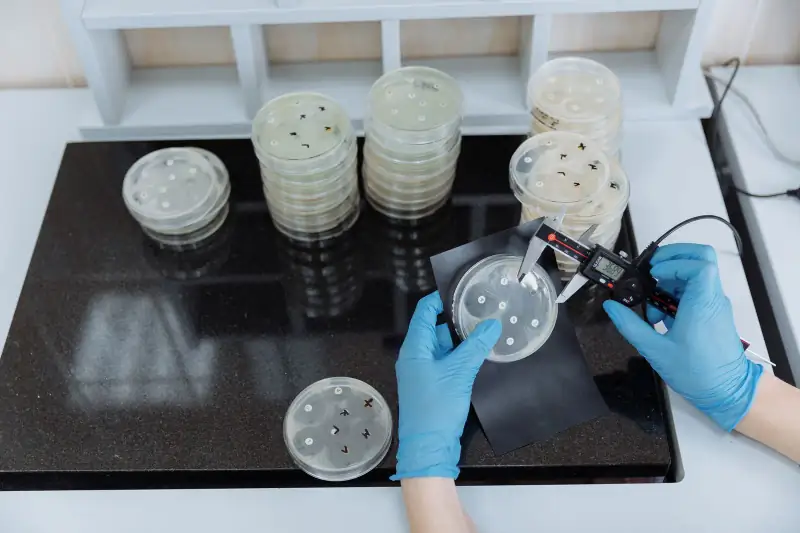
Samples go to a laboratory, which identifies the types of mold present and reports spore counts for air samples.
Written report
Findings, photographs, readings and lab results in one document, with a remediation protocol where one is needed.
Local conditions in Lake Worth
Crawl spaces under raised cottages
Humid air and standing water after rain keep the underside of the floor damp. That can lead to mold on joists and subfloor, soft spots in the floor and a musty smell indoors.
Flat roof additions
Porches and rear rooms were often enclosed under flat or low-slope roofs. Where the addition meets the original house there is a seam, and that seam is a frequent leak point in long rains.
Old supply and drain pipes
Galvanized supply lines and cast iron drains wear out from the inside. A pinhole leak inside a wall or under a floor can run for a long time before any stain appears.
Rooms without steady air conditioning
Some older homes cool with window units or small systems. Rooms that are never dehumidified, such as closed bedrooms and enclosed porches, are where growth tends to start.
How mold testing works
Go over the building's history
We ask about leaks, storms, AC problems, past repairs and where the smell or symptoms are noticed. The history tells us where to look first.
Inspect the building
We check the rooms of concern and the usual trouble spots: plumbing walls, window sills, ceilings, closets on exterior walls and the air handler closet.
Measure moisture and humidity
Walls, floors and ceilings are checked with a moisture meter, and room humidity and temperature are recorded. Wet materials point to where growth is likely.
Decide what to sample
Samples are taken where they will answer a question: an outdoor comparison, the room of concern and any suspect surface. If visible growth already tells the story, we say so.
Send samples to the laboratory
Each sample is labeled, logged on a chain-of-custody form and sent to a laboratory for analysis.
Deliver the written report
The report sets out the findings, readings, photographs and lab results, explains what they mean and, where needed, includes a protocol for remediation.
Hand off to an independent remediator
If removal is needed, you take the report to a licensed mold remediator that is independent of us. After their work, we can return to check the area if you want a post-remediation verification.
Questions
Mold testing in Lake Worth: questions
Something else? Call (754) 221-6945.
Can mold testing tell me if my Lake Worth rental is safe to live in?
Not in the way people hope. The EPA states that there are no federal limits for mold or mold spores, so sample results cannot be checked against a legal standard. What an assessment can do is show where there is growth, how much, and what moisture is causing it. That is useful to a landlord, a tenant or a doctor. Questions about your health should go to a medical professional.
How much does mold testing cost in Florida?
Edwards Property Remediation prices each assessment after learning the size of the property and how many samples make sense. For national context, HomeGuide lists a mold inspection at $300 to $650 with an average of $450, and testing at $50 to $350 per test (figures as published on its page in November 2026). These are third-party national numbers, not our prices. The size of the building and the number of samples drive the cost.
Does homeowners insurance cover mold testing?
It depends on your policy and on what caused the problem. Some insurers pay for an assessment as part of a covered water loss and others do not, and many policies limit mold coverage. Ask your agent or adjuster before the inspection if payment by insurance matters to you. Our written report, with photographs, readings and lab results, gives you a clear record to submit.
How long does mold testing take, and when do I get results?
The site visit depends on the size of the building and how many areas need a close look. A condo with one area of concern is quicker than a large house with several. After the visit, samples go to a laboratory, and the turnaround depends on the lab and the analysis requested. The written report follows once the lab results are in. We tell you the expected timing when you book.
Are home mold test kits accurate?
A settle-plate kit will almost always grow something, because mold spores are present in normal indoor and outdoor air. It cannot tell you where growth is, how much there is or why it is there. A professional assessment adds what the kit lacks: an inspection, moisture readings, an outdoor comparison sample and an interpretation. If you can already see mold on a small area, the EPA says sampling is usually unnecessary.
Request service
Tell us what happened in Lake Worth
Call if water is still moving or the building is not safe. For everything else, send the details and the office will get back to you.
- Florida-licensed mold remediator and mold assessor
- IICRC Certified Firm for water damage and structural drying
- Photographs, moisture readings and a written scope on every job
Open 24 hours · 980 N Federal Highway, Suite 110, Boca Raton, FL 33432
Request service
Goes straight to the EPR office in Boca Raton.