
Jupiter, Florida
Mold Testing in Jupiter, FL
Moisture checks plus air and surface samples sent to a laboratory, with a written report.
- Mold Remediator MRSR2591
- Mold Assessor MRSA3666
- IICRC Certified Firm
Quick answer
In Jupiter, mold testing requests rise after storm season, when owners want to know whether wind-driven rain left anything behind in the walls. A moisture survey of the exterior walls is the core of the assessment, with samples where growth is suspected. We assess under license MRSA3666, and a separate company remediates anything we find.
A common request in Jupiter is an assessment of a seasonal home that went through hurricane season closed up. From inside, everything looks normal. We scan the exterior walls, the areas under windows and beside sliding doors, and the ceilings below roof valleys with moisture meters and a thermal camera. Wet spots get a closer look, sometimes with a wall cavity sample. The report maps which walls are wet, which gives a roofer or window contractor something specific to fix.
Most people call about testing for one of three reasons: a smell with no visible source, a past leak they are not sure was dried, or a need for a result on paper for a sale, a lease or a claim. In South Florida's humidity, mold can grow in places nobody looks, such as behind baseboards, under sinks, above ceilings and around air handlers. A sample alone does not find those places. The inspection does, and it starts with moisture.
What the work covers
Visual inspection
A room-by-room look at the places moisture collects: under sinks, around windows, at ceilings below roofs and bathrooms, and at the air handler.
Moisture and humidity readings
Moisture meter readings on walls and floors and relative humidity readings in the rooms, all recorded in the report.
Air sampling
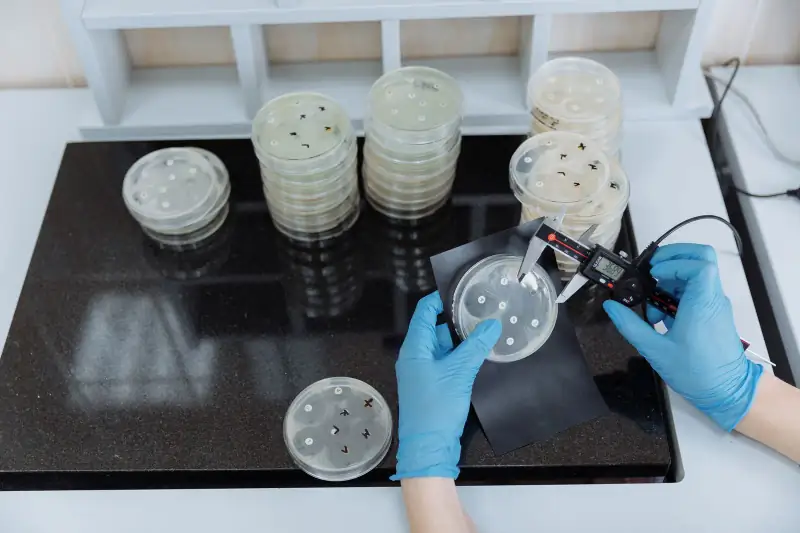
Indoor air samples collected with a sampling pump and compared with an outdoor sample taken the same day.
Surface sampling
Tape lift or swab samples taken from a stain or deposit to confirm whether it is mold.
Laboratory analysis
Samples go to a laboratory, which identifies the types of mold present and reports spore counts for air samples.
Written report
Findings, photographs, readings and lab results in one document, with a remediation protocol where one is needed.
Local conditions in Jupiter
Wind-driven rain at the inlet and beach
Onshore wind pushes rain through window and door openings and hairline stucco cracks. The wall can be wet inside while the interior paint still looks normal.
Salt corrosion
Salt air shortens the life of air conditioning coils, drain pans, window hardware and roof fasteners. Corroded parts leak, and the leaks are usually slow.
Riverfront and low-lying lots
Homes along the Loxahatchee River and nearby canals can take on water from surge and from heavy rain. Dock rooms, garages and ground-level living areas are the most exposed.
Homes closed for the off season
A house that is shut from spring to fall goes through the whole hurricane season with no one inside. Small storm leaks and AC failures have months to turn into mold.
How mold testing works
Go over the building's history
We ask about leaks, storms, AC problems, past repairs and where the smell or symptoms are noticed. The history tells us where to look first.
Inspect the building
We check the rooms of concern and the usual trouble spots: plumbing walls, window sills, ceilings, closets on exterior walls and the air handler closet.
Measure moisture and humidity
Walls, floors and ceilings are checked with a moisture meter, and room humidity and temperature are recorded. Wet materials point to where growth is likely.
Decide what to sample
Samples are taken where they will answer a question: an outdoor comparison, the room of concern and any suspect surface. If visible growth already tells the story, we say so.
Send samples to the laboratory
Each sample is labeled, logged on a chain-of-custody form and sent to a laboratory for analysis.
Deliver the written report
The report sets out the findings, readings, photographs and lab results, explains what they mean and, where needed, includes a protocol for remediation.
Hand off to an independent remediator
If removal is needed, you take the report to a licensed mold remediator that is independent of us. After their work, we can return to check the area if you want a post-remediation verification.
Questions
Mold testing in Jupiter: questions
Something else? Call (754) 221-6945.
Is mold testing worth doing after a storm in Jupiter if I see no damage?
A moisture inspection is the more useful first step. Mold needs time to grow, and the EPA advises drying wet materials within 24 to 48 hours to prevent it, so soon after a storm the question is whether anything is wet. If the home sat closed for weeks after the storm, or there is a musty smell, then an assessment with sampling makes sense. We assess under Florida Mold Assessor license MRSA3666.
How much does mold testing cost in Florida?
Edwards Property Remediation prices each assessment after learning the size of the property and how many samples make sense. For national context, HomeGuide lists a mold inspection at $300 to $650 with an average of $450, and testing at $50 to $350 per test (figures as published on its page in November 2026). These are third-party national numbers, not our prices. The size of the building and the number of samples drive the cost.
Does homeowners insurance cover mold testing?
It depends on your policy and on what caused the problem. Some insurers pay for an assessment as part of a covered water loss and others do not, and many policies limit mold coverage. Ask your agent or adjuster before the inspection if payment by insurance matters to you. Our written report, with photographs, readings and lab results, gives you a clear record to submit.
How long does mold testing take, and when do I get results?
The site visit depends on the size of the building and how many areas need a close look. A condo with one area of concern is quicker than a large house with several. After the visit, samples go to a laboratory, and the turnaround depends on the lab and the analysis requested. The written report follows once the lab results are in. We tell you the expected timing when you book.
Are home mold test kits accurate?
A settle-plate kit will almost always grow something, because mold spores are present in normal indoor and outdoor air. It cannot tell you where growth is, how much there is or why it is there. A professional assessment adds what the kit lacks: an inspection, moisture readings, an outdoor comparison sample and an interpretation. If you can already see mold on a small area, the EPA says sampling is usually unnecessary.
Request service
Tell us what happened in Jupiter
Call if water is still moving or the building is not safe. For everything else, send the details and the office will get back to you.
- Florida-licensed mold remediator and mold assessor
- IICRC Certified Firm for water damage and structural drying
- Photographs, moisture readings and a written scope on every job
Open 24 hours · 980 N Federal Highway, Suite 110, Boca Raton, FL 33432
Request service
Goes straight to the EPR office in Boca Raton.