Fire-damaged contents triage is a room-by-room process for documenting items, separating safe work zones, noting material and residue conditions, and sorting belongings into cleaning, pack-out staging, expert review, or pending-disposal categories. It begins only after the appropriate authority permits access. Restoration professionals can organize observations and explain cleaning options, while owners and insurers retain their respective decision roles. Edwards Property Remediation provides fire damage restoration and can define how contents coordination fits the property-specific service plan.
Wait for authorized, safe access
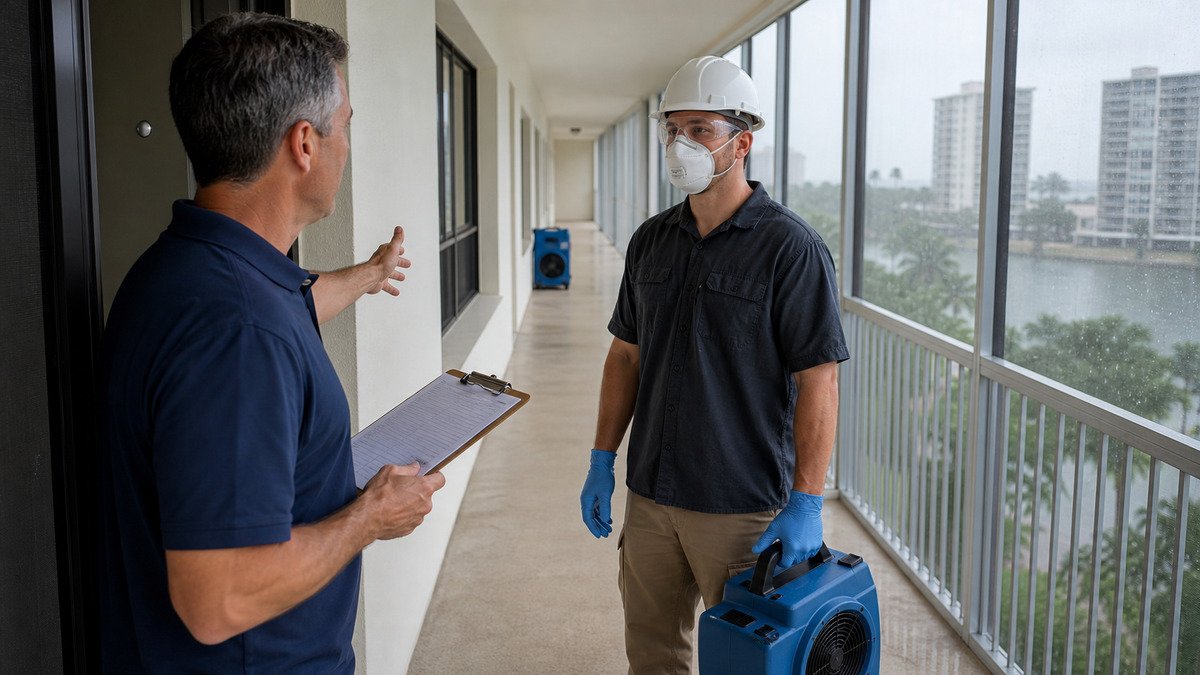
Do not enter a fire-damaged room to retrieve or sort belongings until emergency, structural, electrical, and other relevant authorities have allowed the necessary access. Floors, ceilings, stairs, glass, energized equipment, hot spots, water, and unstable contents can remain hazardous after visible flames are out. Odor or appearance cannot establish that an area is safe. Keep occupants, pets, and unassigned vendors outside the restricted boundary.
Confirm who controls entry, which rooms are available, what protective measures apply, and whether an escort is required. A restoration authorization does not overrule fire-department restrictions or findings from the qualified professionals responsible for the building. If conditions change, stop and refer the question to the appropriate party. Edwards Property Remediation can plan contents work only in areas authorized for its fire damage restoration service.
- Confirm who has released each room for the planned activity
- Keep occupants and unassigned workers outside restricted zones
- Identify electrical, structural, water, and residue concerns
- Stop work and escalate newly observed hazards
Build a room-by-room inventory before sorting
Use consistent room names and proceed systematically rather than carrying random items to another area. An inventory entry can include an item or grouped-item description, original room and location, visible condition, photograph reference, owner identification when needed, and the next decision category. Numbered labels should connect the item, image, container, and list without covering a surface that still needs evaluation.
Wide room photographs establish context before closer item images. Do not open drawers, appliances, safes, electronics, or closed containers unless the scope and safety plan allow it. Preserve the original order where possible until documentation is complete. The inventory is an organizational record, not a valuation, guarantee of restoration, formal custody certification, or final coverage decision.
Create separate affected, review, and clean zones
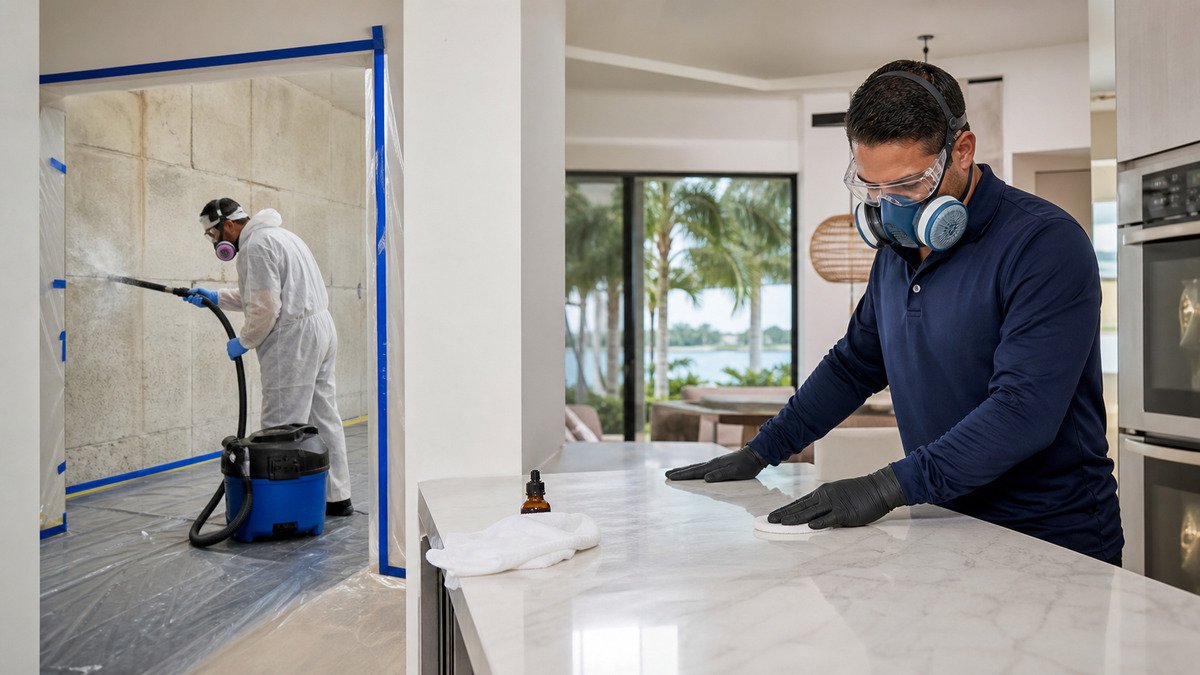
Contents should not move directly from a residue-affected room into an unaffected living or storage area. Define an affected zone for initial handling, a review or cleaning zone for controlled decisions, and a clean or completed zone for items that meet the project’s handling criteria. Establish movement routes, surface protection, container staging, and labeling before the first item crosses a boundary.
A visual boundary does not prove that every object on one side has the same condition. Air movement, firefighting water, residue, material porosity, heat, and direct contact may differ within a room. The zones support organized handling; trained observations and the defined cleaning scope still guide each item. Report a torn barrier, mixed container, lost label, or unauthorized entry promptly.
Use material and residue context for triage
Hard sealed objects, unfinished wood, upholstery, paper, clothing, electronics, food, cosmetics, artwork, and composite goods respond differently to heat, smoke residue, soot, water, and cleaning. Appearance alone does not prove that an item is restorable or requires disposal. The proposed category should be supported by material and condition information, with expert evaluation identified before further handling when needed.
Residues can vary by burned materials and fire conditions, so occupants should not wipe, vacuum, taste, power on, or test affected belongings themselves. An unplanned attempt can spread residue or change the item’s condition. Restoration professionals should describe the cleaning or handling methods they provide and flag electronics, textiles, documents, art, appliances, or other contents that need outside review.
Assign a decision status without declaring the outcome
Useful working categories include pending owner identification, pending insurer direction, candidate for cleaning, specialist review, pack-out staging, remain in place, and disposal decision pending. “Pending” is important when information is incomplete. It prevents an early visual impression from being mistaken for final authorization. Categories should identify the next responsible person and action, not just describe the object’s appearance.
The owner can identify priority, use, personal significance, and replacement concerns. The restoration team can explain observed condition and service options. The insurer determines claim and coverage matters under the applicable policy. None of these roles should be blended into a promise that an item will be saved, replaced, paid for, or discarded. Record decisions, authorizations, and changes with dates and names.
Ask precise questions about pack-out and cleaning
If pack-out is proposed, ask which rooms and item groups are included, how objects will be listed and labeled, where review occurs, how containers are identified, who can approve movement, and what storage or return steps remain outside the quoted scope. Clarify whether large furniture, built-ins, appliances, documents, electronics, and fragile items require separate handling. Do not assume “contents” means every movable object.
For cleaning, confirm what materials and residue conditions the method addresses, whether a small evaluation area is appropriate, how results will be reviewed, and what happens when an item does not respond as anticipated. Excluded items and outside referrals belong in writing. A cleaning attempt is not guaranteed restoration, and a visually improved surface cannot support a broad safety conclusion.
Escalate sentimental, high-value, and sensitive items
Before routine handling begins, have the owner flag photographs, heirlooms, legal papers, identification, medication, collections, artwork, business records, data devices, and other items with unusual importance or handling needs. Priority does not prove that an item can be restored, but it may justify pausing for an expert opinion or different documentation. Avoid marking value on an exposed label that could create a privacy or security concern.
Food, medicine, cosmetics, medical devices, firearms, hazardous materials, regulated records, and certain electronics may raise questions outside a general contents-cleaning service. Secure the area and refer decisions to the appropriate authority, manufacturer, professional, insurer, or experienced provider. Edwards Property Remediation should identify its boundaries rather than improvising a conclusion in a category that requires different expertise.
Maintain an organized movement history
Record each item or container identifier, original room, current zone or destination, movement date, person or team making the move, and decision status. When control transfers to an outside provider, storage facility, owner, or other party, note the handoff and related document. This chain-of-custody-style organization supports traceability, but it should not be advertised as formal certified custody unless a separately verified service actually provides that standard.
Edwards Property Remediation’s fire damage restoration page provides the verified service context for a property-specific discussion. Share the released rooms, affected contents categories, owner priorities, known insurer instructions, access limits, and items needing outside review. Confirm the inventory approach, zones, pack-out and cleaning service, exclusions, decision roles, and closeout deliverables before authorizing contents work.
Related resources
- Review the core property service supporting fire contents coordination — Fire Damage Restoration.
- Compare surface treatment considerations for suitable recovered contents — Sanitization & Disinfection.
- Consider building air concerns separately from individual salvage decisions — Indoor Air Quality Control.
- Explore material-focused cleaning options for appropriately evaluated belongings — Microbial Cleaning.
Frequently asked questions
Can the team retrieve an essential item first?
Identify the item and likely room before entry. Retrieval depends on authorized access, safe conditions, documentation needs, and whether moving it would disturb residue or other contents.
Should photographs be removed from frames before cleaning?
Not without handling guidance. Frames, glazing, photographs, and mounting materials can have different conditions and may need evaluation before they are separated.
What happens if an item has no clear owner?
Keep it connected to its original room and inventory record, mark ownership as pending, and route identification through the designated property or owner contact.
Can cleaned items return before building repairs finish?
Only with an approved clean destination and handling plan. Ongoing demolition, moisture, dust, traffic, or unsecured storage can expose contents again.
What should be settled before contents work closes?
Reconcile inventory status, current location, unresolved owner or insurer decisions, excluded items, outside referrals, return arrangements, and the records delivered to the authorized contact.
Take the next step with Edwards Property Remediation
Owners seeking fire contents guidance from Edwards Property Remediation can select Contact.