Mold remediation in occupied rooms requires a site-specific plan for separation, access, belongings, ventilation, cleaning, and communication before work begins. Occupants should not disturb suspected growth or create their own containment. Instead, identify who uses adjoining spaces, document sensitivities or access needs without drawing medical conclusions, and ask how work areas will be isolated and released. Edwards Property Remediation can evaluate the property and explain how its mold remediation, microbial cleaning, and indoor air quality services may fit the observed conditions.
Define the affected and occupied spaces separately
Begin with a simple floor plan or room list that distinguishes the suspected work area from bedrooms, offices, kitchens, corridors, and mechanical spaces that remain in use. Include doors, shared returns, stairways, and the paths occupants need for daily access. This is planning information, not a contamination map. The actual remediation boundary should be based on inspection findings, the condition of materials, and the professional scope for the property.
Do not assume that a closed door alone creates adequate separation. Likewise, do not conclude that every neighboring room is affected because it shares a wall or air system. Ask which spaces need restricted access, what observations support the boundary, and what could cause that boundary to change. A clear distinction between confirmed conditions and precautionary controls helps owners make practical occupancy decisions without overstating what is known.
- List rooms that must remain accessible
- Identify shared doors, corridors, and air pathways
- Record children, pets, tenants, and work schedules that affect access
- Let the site assessment determine the remediation boundary
Avoid disturbing materials before evaluation
Scrubbing, cutting drywall, lifting flooring, or directing a fan at suspected growth can release or redistribute particles. Painting over discoloration, spraying fragrance, or applying an unverified household product may change the surface without correcting the moisture condition. Keep people out of the immediate area, avoid handling porous materials, and photograph visible conditions only from a safe position. If the area has electrical or structural hazards, leave it undisturbed.
The moisture source matters because remediation is not complete if water continues entering or materials remain wet. Gather what you know about leaks, condensation, previous repairs, and when odors or visible changes appeared. A mold assessment or testing decision may be appropriate in some situations, while other situations may proceed from visible conditions and a defined scope. The correct pathway depends on the property and should not be selected from a generic checklist alone.
Plan containment and movement routes
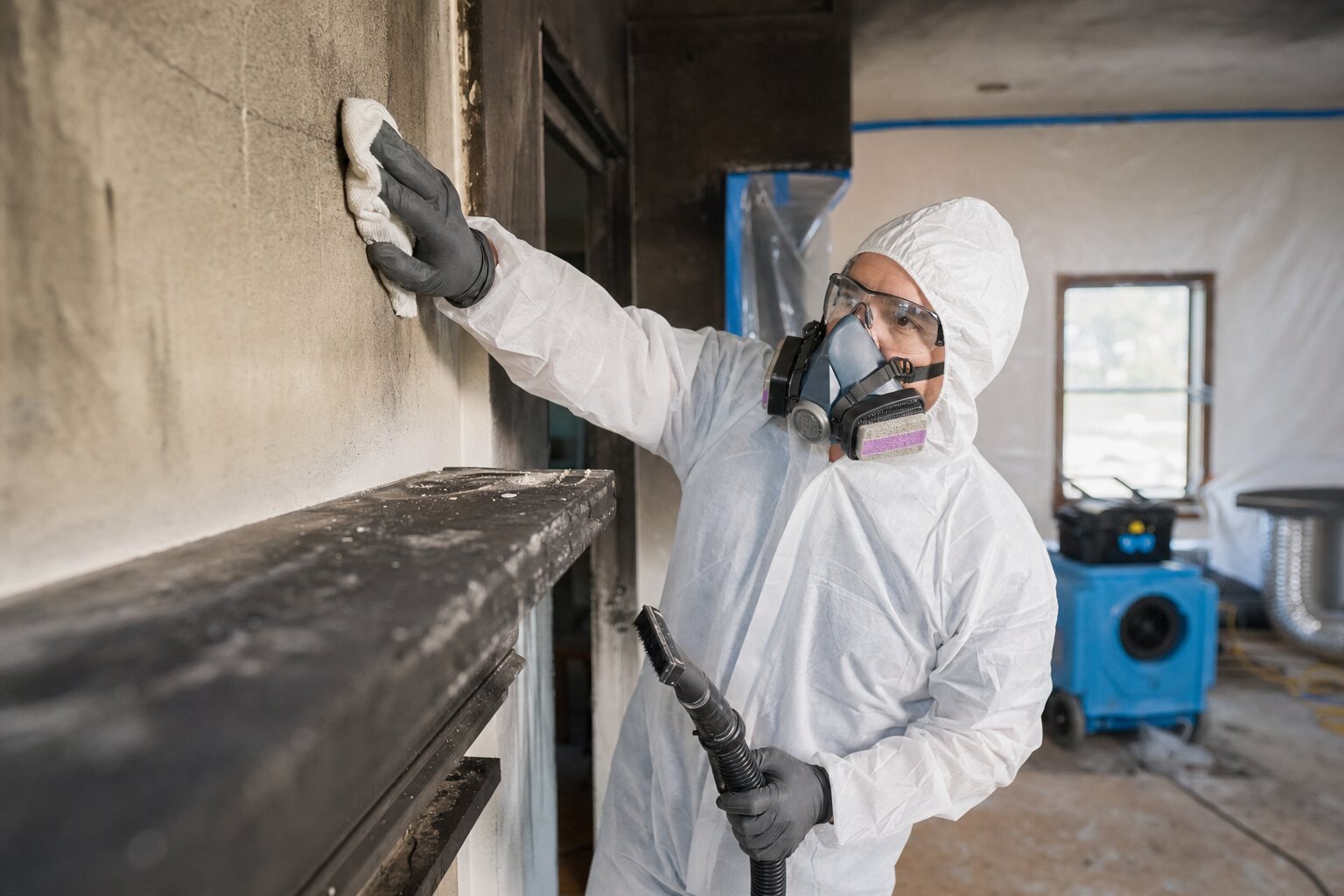
Ask how the work area will be separated from occupied rooms and how workers, tools, debris, and cleaned materials will move through the building. A practical route should reduce unnecessary traffic through living or business areas. Discuss entry and exit points, floor protection, waste handling, and what happens if the planned route becomes unavailable. Containment details must reflect the actual layout and scope rather than a standard promise that fits every job.
Mechanical systems deserve specific discussion because returns, supply registers, exhausts, and pressure relationships can affect the work plan. Occupants should not seal, disable, or modify HVAC equipment without professional direction. Ask who will decide whether equipment serving the work area needs operational changes and how comfort will be managed elsewhere. Edwards Property Remediation’s indoor air quality control service provides relevant context, but each building requires its own evaluation.
Decide what happens to belongings
Create an inventory of important contents in and near the proposed work area before anything is moved. Separate essential daily-use items from objects that can remain inaccessible during the project. Do not carry visibly affected or dusty belongings into clean rooms without a handling plan. The appropriate response may differ for hard, washable items, porous contents, electronics, paper records, upholstered goods, and objects with sentimental or business value.
Ask which contents are included in the remediation scope, where they will be staged, how their original location will be documented, and who decides whether specialized handling is needed. Avoid treating appearance as proof that an item is unaffected or unsalvageable. The restoration provider can explain cleaning and access options within its scope, while owners may need separate guidance for valuable, regulated, or unusually sensitive property.
Set rules for occupants, pets, and visitors
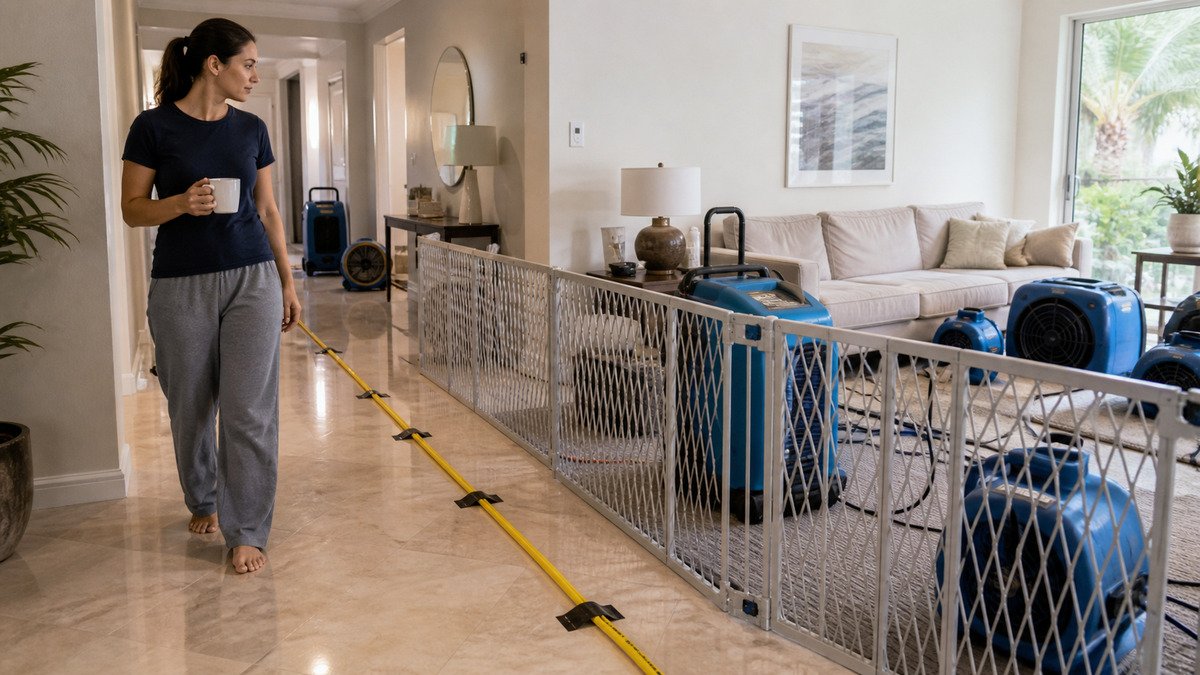
Everyone using the property should receive the same short instructions: where the restricted zone begins, which route remains open, who can authorize entry, and whom to contact with a concern. Barriers and equipment should not be moved for convenience. Children and pets need reliable separation from work areas, cords, machines, and staged materials. Delivery workers, maintenance staff, and guests should also be redirected so they do not enter unexpectedly.
Whether a person should remain in the building is not a decision an article or restoration company can make universally. The answer may depend on the work scope, building layout, project controls, individual health considerations, and advice from an appropriate healthcare professional. Ask the remediation provider to describe expected access restrictions and work conditions so occupants can make informed arrangements with the relevant qualified advisers.
Understand remediation, cleaning, and testing roles
Mold remediation focuses on addressing affected materials and controlling the work area according to the defined scope. Microbial cleaning may be part of a broader response where surfaces or contents require a planned cleaning method. Mold testing gathers samples or measurements for a specific question; it is not another name for remediation. Indoor air quality control is broader still and should be discussed in relation to the actual building concern rather than used as a blanket claim of safety.
Ask who establishes the scope, what observations or documents guide it, and how changes will be approved. If independent assessment or post-remediation evaluation is part of the project, clarify the roles and timing before work starts. Edwards Property Remediation offers mold testing, mold remediation, microbial cleaning, and indoor air quality control pages, allowing property owners to review the service context while arranging a site-specific conversation.
Use daily updates to prepare for closeout
Choose one owner or manager contact and agree on the best time and format for updates. Useful updates cover areas worked in, access changes, equipment status, new observations, pending decisions, and the next planned activity. If a discovery changes the anticipated scope, request a clear explanation before authorizing additional work. Keep messages, photographs, and approvals together so occupants are not relying on different versions of the plan.
Report damaged barriers, unexpected odors, water intrusion, power interruptions, or unauthorized entry promptly. Leave equipment and containment undisturbed while the project contact evaluates the change. A revised occupied route should be confirmed before use. Consistent communication supports safer boundaries and reduces disruption without implying that a daily update can certify environmental or medical outcomes.
Before unrestricted use resumes, ask what work has been completed, what cleaning remains, and what conditions govern removal of barriers or equipment. Confirm whether source repairs are complete and whether any separate evaluation, rebuilding, or maintenance task remains outside the remediation scope. Obtain project records that describe performed services. A visible improvement alone should not be used as the only basis for closing out the plan.
Closeout questions should cover the rooms and materials addressed, remaining exclusions, barrier and equipment removal, final cleaning, reentry instructions, delivered documents, and who handles any follow-up evaluation. A project record can describe completed work without promising a universal clearance or health outcome. Continue watching the corrected moisture source; new leakage, condensation, staining, or odors call for a fresh report rather than cosmetic concealment.
Related resources
- Review controlled remediation options for affected rooms and materials — Mold Remediation.
- Explore cleaning approaches for affected materials with identified microbial conditions — Microbial Cleaning.
- Understand when sampling may answer a defined mold-related question — Mold Testing.
- Consider broader building air concerns alongside the occupied room plan — Indoor Air Quality Control.
Frequently asked questions
How long will an occupied room be unavailable?
There is no reliable universal duration. Access depends on the assessed scope, material decisions, work progress, monitoring, and any separate evaluation required for the project.
What if an essential document or medication is inside the planned work area?
Tell the project lead before containment or work begins. A coordinated retrieval may be possible; occupants should not cross a restricted boundary to recover the item themselves.
Where should pets stay during remediation?
Use a secure unaffected room or an off-site arrangement based on the work zones and travel paths. Food, bowls, bedding, and litter should remain outside controlled areas.
Who approves a change after concealed conditions are found?
The written project process should identify the authorized owner or manager contact. New findings, proposed work, cost or schedule effects, and exclusions should be explained before approval.
Which closeout documents should an owner request?
Request the final service scope, changes, areas and materials addressed, cleaning or equipment records as applicable, remaining exclusions, reentry guidance, and identified follow-up responsibilities.
Take the next step with Edwards Property Remediation
Property teams planning occupied-room remediation can choose Book Appointment.