
Greenacres, Florida
Water Damage Restoration in Greenacres, FL
Water extraction, removal of materials that cannot be saved, drying and cleaning.
- Mold Remediator MRSR2591
- Mold Assessor MRSA3666
- IICRC Certified Firm
Quick answer
Water damage restoration in Greenacres usually involves more than one household. Water from an upstairs unit, a shared wall or a common roof affects neighbors, and an association or landlord is often part of the conversation. We dry each affected unit and keep separate photographs and moisture readings for each one.
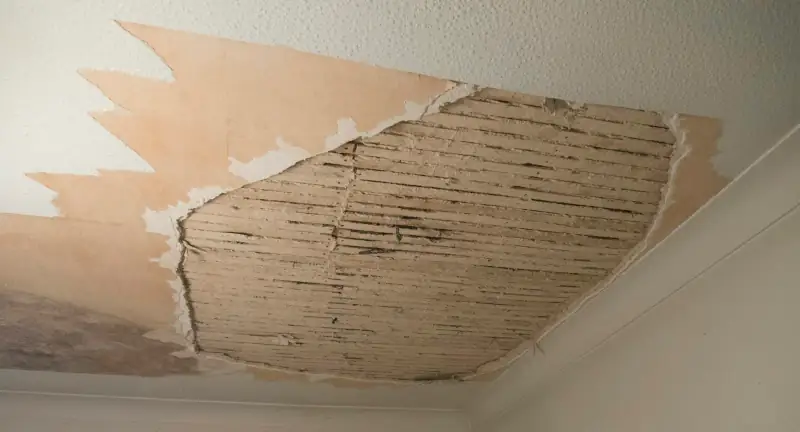
A common call in Greenacres is a two-story townhome or apartment building where a toilet supply line or a washing machine hose failed upstairs. Water has come through the ceiling below, filled a light fixture and soaked carpet on both levels. Power to the wet ceiling is shut off first. We extract the water, take down ceiling drywall that is sagging, and dry the floor system between the two levels, which holds water in the framing and insulation long after the surfaces look dry.
Water moves fast in a building. It runs under baseboards, wicks up drywall and soaks into the pad beneath carpet, so the wet area is almost always larger than the puddle. In Palm Beach County the usual causes are supply line and water heater failures, AC condensate overflows, roof leaks in summer storms and wind-driven rain during hurricane season, which runs from June 1 to November 30. Warm, humid air slows natural drying, and the EPA advises drying wet materials within 24 to 48 hours to prevent mold.
What the work covers
Water extraction
Standing water is pumped or vacuumed out, and water is pulled from carpet, pad and hard floors with extraction tools.
Moisture mapping
Moisture meters and humidity readings show how far water traveled inside walls, under floors and into adjoining rooms.
Removal of unsalvageable materials
Saturated carpet pad, swollen baseboards, collapsed drywall and wet insulation that cannot be dried or cleaned are removed.
Structural drying
Air movers and dehumidifiers are placed to a drying plan and checked every day until materials reach a dry standard.
Cleaning
Affected surfaces are cleaned. Where the water was contaminated, an EPA-registered antimicrobial is applied according to its label.
Job documentation
Photographs, daily moisture readings and a written scope of what was removed, dried and cleaned.
Local conditions in Greenacres
Stacked and attached units
Townhomes and apartments share floors, ceilings and walls. Water from one unit's kitchen, bath or laundry reaches the next unit through the framing, usually before either resident notices.
High water table and summer rain
Inland ground stays saturated in the rainy season and drains slowly. Water can pond against slabs and seep in at door thresholds and the base of walls after an afternoon downpour.
Leaks that are reported late
In a rental, a slow leak or a damp wall may go on for weeks before the owner hears about it. By then the repair often includes mold work as well as plumbing.
Air handlers in interior closets
In townhomes and apartments the air handler often sits in a hall closet or above a ceiling. A clogged condensate drain overflows straight onto drywall and carpet in the middle of the unit.
How water damage restoration works
Stop the source and make the area safe
Shut off the water if you can do it safely. We check for electrical and ceiling hazards before work begins. If the source is a broken pipe or an opening in the roof, a plumber or roofer makes that repair.
Inspect and classify the loss
We identify the category of water (1, 2 or 3, by contamination) and the class of drying (1 to 4, by how much water the materials hold), then map the wet area with moisture meters.
Extract the water
Standing water and water held in carpet and pad are removed. Extraction takes out far more water, far faster, than evaporation can.
Remove what cannot be saved
Materials that are too damaged or too contaminated to dry in place are removed, bagged and taken out. What comes out depends on the water category.
Set the drying equipment
Air movers and dehumidifiers are placed according to the size of the wet area and the materials involved. Baseboards may come off or small holes be drilled so air reaches wall cavities.
Monitor every day
We return daily to take moisture, temperature and humidity readings, record them, and move or remove equipment as areas reach the dry standard.
Clean and close out
Surfaces are cleaned, final readings are recorded and you receive the job record. Replacing drywall, flooring or cabinets is done afterward by a licensed contractor.
Questions
Water damage restoration in Greenacres: questions
Something else? Call (754) 221-6945.
Water from the unit above is coming through my ceiling in Greenacres. Who arranges water damage restoration?
Start by telling the upstairs resident and the property manager or association, so the water is shut off. Each owner then usually arranges drying for their own unit, although some associations handle it for the building. Do not wait for that to be settled before acting, because the EPA advises drying wet materials within 24 to 48 hours. We can document your unit separately, so the question of who pays can be sorted out afterward. Coverage depends on the policies involved.
How much does water damage restoration cost?
Edwards Property Remediation prices each job after seeing it, because the cost follows the amount of water, how contaminated it is and how much material has to come out. For national context, HomeGuide lists $2,000 to $6,000 on average (page dated February 2026) and Fixr lists $1,200 to $5,000 with an average of $3,000 (updated January 2025). These are third-party national figures, not our prices.
Does homeowners insurance cover water damage in Florida?
It depends on your policy and on the cause. Many policies treat a sudden failure, such as a burst supply line, differently from a slow leak that went on for weeks, and your insurer makes that call. According to FEMA, standard homeowners policies do not cover flood. We document the job with photographs, moisture readings and a written scope so you have a clear record for your claim.
How long does water damage restoration take?
It depends on how much water there was, what it soaked into, how long it sat and how humid the building is. Carpet over a concrete slab dries differently from wet cabinets, plaster or wood flooring. Drying ends when daily moisture readings reach the dry standard, not on a fixed day. Repairs such as new drywall or flooring come after drying and are scheduled with a contractor.
Can I dry water damage myself with fans?
A small spill of clean water on a hard floor, caught right away, can often be handled with towels, fans and a dehumidifier. Fans alone do not remove moisture from the air, and they do not reach water inside walls, under flooring or in cabinet bases. If water reached drywall or carpet pad, came from a drain or sat for more than a day or two, have it measured with a moisture meter.
Request service
Tell us what happened in Greenacres
Call if water is still moving or the building is not safe. For everything else, send the details and the office will get back to you.
- Florida-licensed mold remediator and mold assessor
- IICRC Certified Firm for water damage and structural drying
- Photographs, moisture readings and a written scope on every job
Open 24 hours · 980 N Federal Highway, Suite 110, Boca Raton, FL 33432
Request service
Goes straight to the EPR office in Boca Raton.