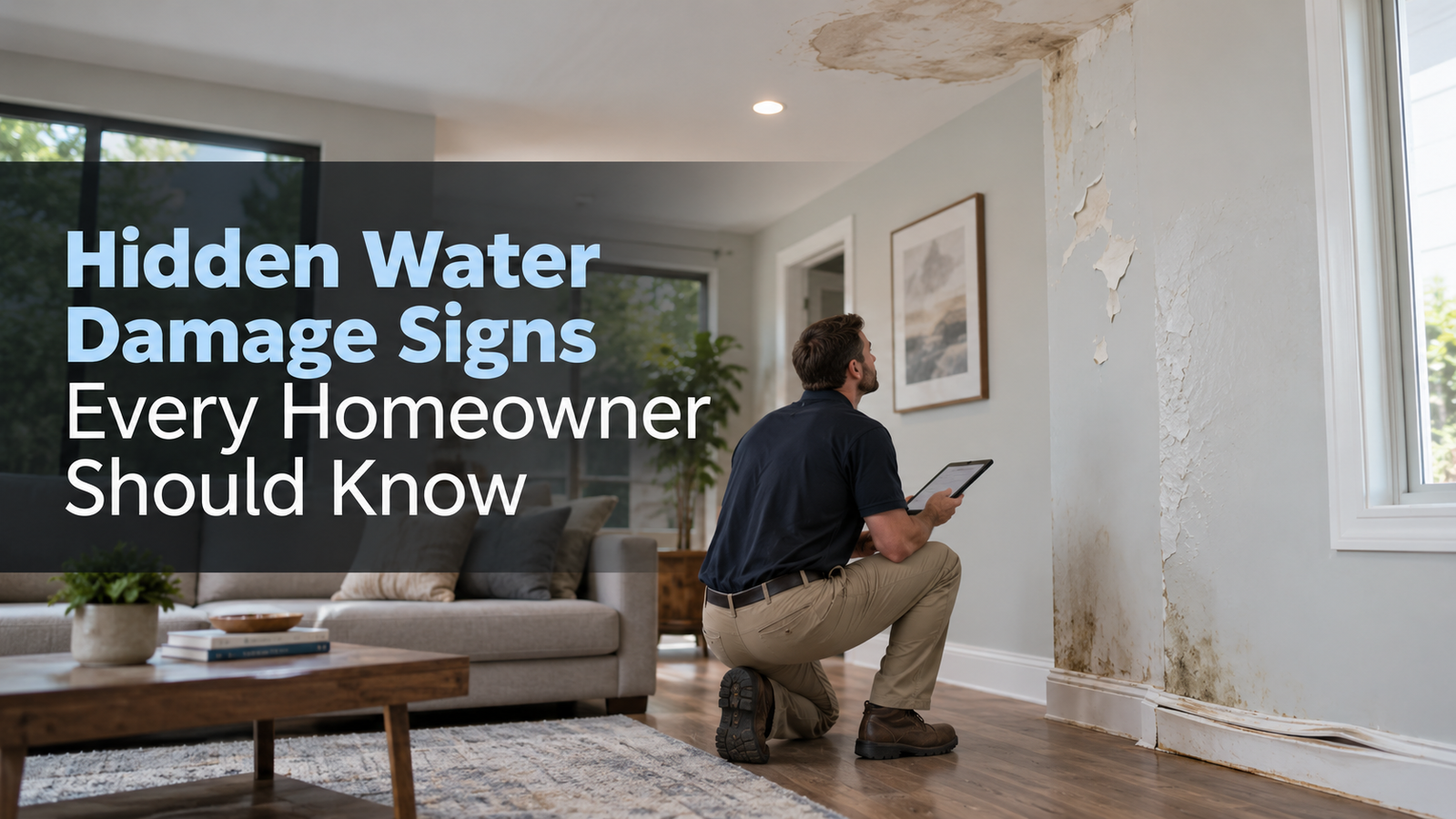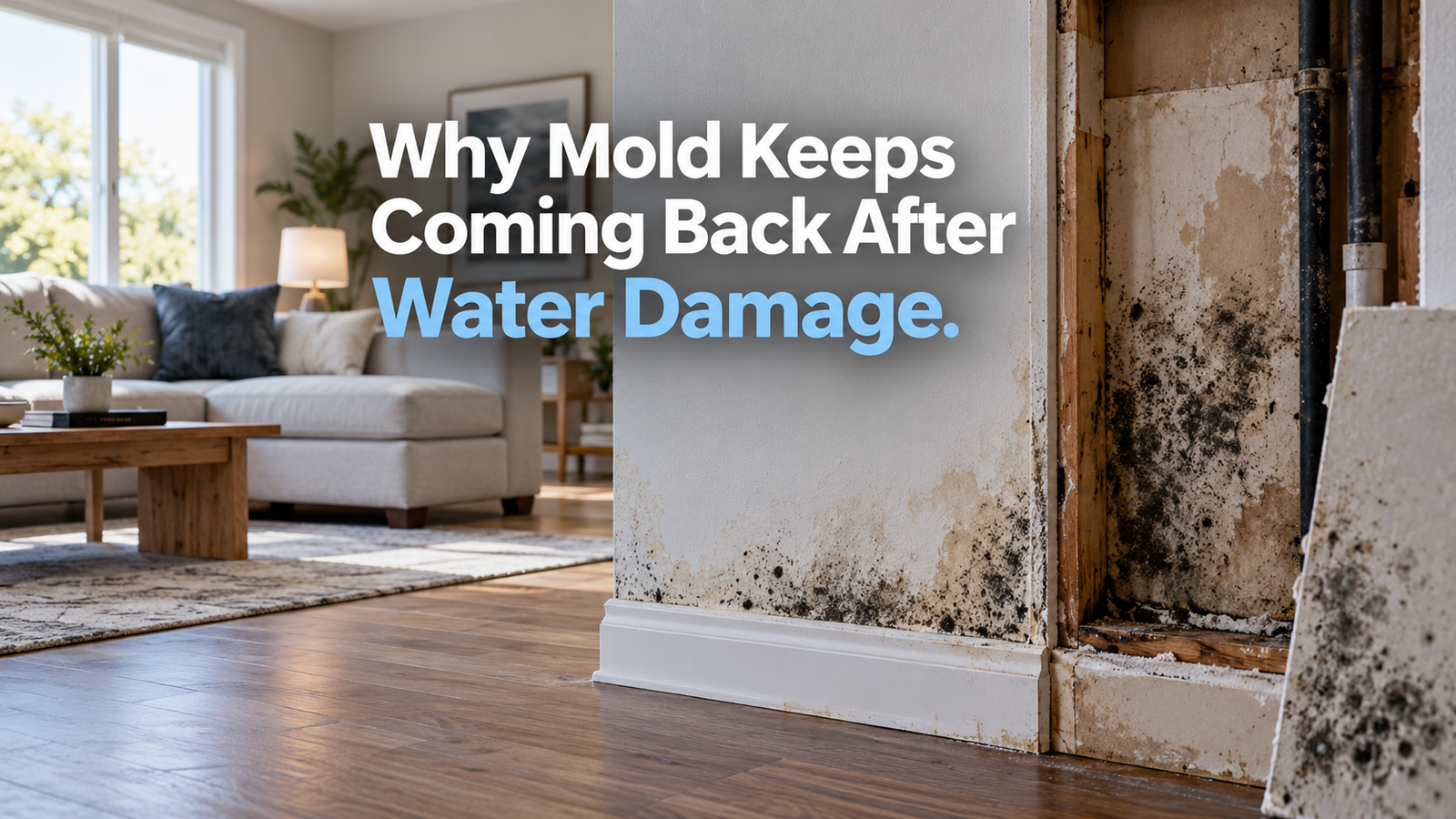
Water damage is the leading cause of mold growth. Not all water damage is treated the same, though. Different degrees of water damage are separated into different classes.
Water damage should be classified into one of the following classes:
Class 1 Water Damage
Slow Evaporation Rate: Water losses that affect only part of a room or area, or losses with lower permeance/porosity materials (e.g., plywood, particle board, structural wood, VCT, concrete). Little or no wet carpet or padding is present. Minimum moisture is absorbed by materials, releasing moisture slowly.
Related: Slow Water Leaks Can Cause Mold Damage
Class 2 Water Damage
Fast Evaporation Rate: Water losses that affect an entire room with carpet/pad. Water has wicked up walls 12″-24″. There is moisture remaining in structural materials (e.g., plywood, particleboard, structural wood, concrete).
Class 3 Water Damage
Fastest Evaporation Rate: Water may have come from overhead. Ceilings, walls, insulation, carpet, cushion and sub-floor in the entire area of your home are saturated. Typically, heavy saturation of the materials above the flooring.
Class 4 Water
Damage Specialty Drying Situations: These consist of wet materials with very low permeance/porosity (hardwood, plaster, brick, concrete, stone). Typically, there are deep pockets of saturation, which requires very low specific humidity.
Summary – Different Water Damage Classes
As you can see, water damage is split up into four different classes. This helps a mold remediation company better address the entire scenario to the best of their abilities.
If you feel that your water damage has led to a mold issue, please contact Edwards Property: Mold Damage Remediation of South Florida.
Frequently Asked Questions
What are the four classes of water damage?
Water damage is classified into four classes: Class 1 (slow evaporation, minimal moisture), Class 2 (fast evaporation, entire room affected), Class 3 (fastest evaporation, saturation from overhead), and Class 4 (specialty drying for low-porosity materials).
Why is classifying water damage important?
Classifying water damage helps remediation professionals determine the best drying and restoration methods, ensuring effective mold prevention and structural repair tailored to the damage severity and materials involved.
What materials are affected in Class 4 water damage?
Class 4 water damage involves materials with very low permeance or porosity such as hardwood, plaster, brick, concrete, and stone, requiring specialized drying techniques due to deep saturation pockets.
Can slow water leaks cause mold damage?
Yes, slow water leaks can cause mold damage by creating prolonged moisture exposure, which promotes mold growth, especially in materials with slow evaporation rates like plywood and structural wood.
Who should I contact if water damage has led to mold issues?
If water damage has caused mold problems, contact Edwards Property Remediation, a licensed and insured South Florida company specializing in mold remediation and water damage restoration.