
Quick Answer
Protect people first, control or assign the source, document conditions, and avoid actions that spread water, dust, soot, mold, or chemicals. The final plan should be based on material condition, contamination, access, measurements, and a clear completion standard—not appearance alone.
Key Takeaways
- Safety and source control come before cosmetic cleanup.
- Document the original condition and every major scope change.
- Hidden layers and building systems can remain affected after surfaces look normal.
- Use material-specific methods, product labels, and measured completion criteria.
- Seek professional assessment for extensive, contaminated, recurring, hidden, or hazardous conditions.
Mold Remediation vs. Mold Removal: What Property Owners Should Know should not be reduced to wiping a surface or applying a chemical. A responsible response connects the moisture source, material condition, containment, cleaning or removal decisions, and documented completion. The response becomes easier to manage when each action has a purpose and a stop condition.
Understanding Mold Remediation vs. Mold Removal: What Property Owners Should Know
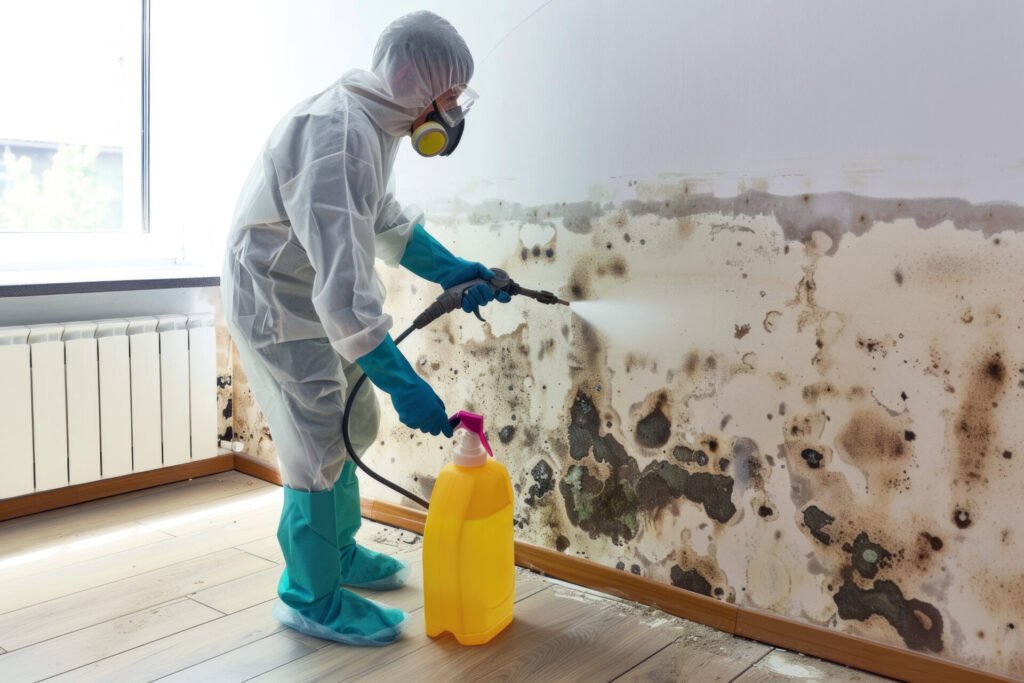
Mold remediation is a moisture-control and contamination-control process. It is more than wiping visible spots or applying a chemical. A responsible plan addresses why growth occurred, limits the movement of dust and spores, removes or cleans affected materials as appropriate, and verifies that the area is dry and clean before reconstruction. For mold remediation vs mold removal, apply those principles to the actual source, material condition, building layout, and evidence available at the property.
“Removal” can imply that every spore will be eliminated, which is not realistic in normal environments. Remediation focuses on returning the building to a clean, dry, normal condition by correcting moisture, controlling the work area, removing damaged material, cleaning retained surfaces, and verifying completion. The practical outcome matters more than marketing terminology.
Use this guide to understand the process and prepare better questions for contractors, managers, and insurers. The correct scope depends on the source, material condition, access, contamination, and measurements at the property. For mold remediation vs mold removal, apply the guidance to the actual source, material condition, building layout, and occupants rather than treating it as a generic restoration formula.
For project-specific help with mold remediation vs mold removal, review EPR’s mold remediation information. A site assessment can connect the visible condition to the source, material condition, and safe restoration sequence.
Immediate Priorities and Stop Conditions
The first priority is to stop the moisture source and avoid disturbing suspect growth. Scrubbing, sanding, demolition, or directing a fan at mold can spread particles into adjacent rooms. People with asthma, significant allergies, immune suppression, or other health concerns should seek medical guidance and avoid cleanup exposure. Move in a deliberate order so the response does not destroy evidence or create a larger affected area.
Stop and keep the area restricted when any of the following is present:
- Disturbing a large or hidden mold area.
- Mold inside hvac equipment or ductwork.
- Wet porous materials.
- Contaminated dust.
- Occupant health sensitivity.
If anyone may be in danger, leave the area and contact emergency services. Source and system hazards belong with the appropriate qualified trade before restoration work proceeds.
A Step-by-Step Response Plan
- Find and correct the moisture source. Remediation cannot succeed while materials continue to get wet. Investigate plumbing, roofing, window leakage, condensation, drainage, and humidity. A stain may identify where water appeared rather than where it entered, so tracing the path is often necessary.
- Define the affected area. Visible growth is only one clue. Odor, staining, swelling, elevated moisture, and conditions behind finishes can change the boundary. Unnecessary demolition increases cost and dust, while an incomplete boundary leaves contamination behind.
- Ask for process, not a label. A proposal should explain source correction, containment, material decisions, cleaning methods, waste handling, verification, and exclusions. The phrase used in the title of the service is less important than the defined scope.
- Prevent cross-contamination. Close or isolate the work area as appropriate, protect nearby contents, and control pathways such as doors, hallways, return-air openings, and shared chases. Fans that blow from the affected area into clean rooms can distribute particles rather than solve the problem.
- Choose cleaning or removal by material. Hard, intact surfaces may be cleanable, while porous materials that are deeply colonized, deteriorated, or difficult to access often require removal. The decision should consider structural value, finish, contamination depth, cost, and whether the material can be cleaned and dried completely.
- Clean systematically. Work from controlled zones toward exit pathways, use HEPA-filtered equipment where appropriate, and clean settled dust rather than only the visible patch. Products should be used according to their labels; chemicals do not replace physical removal of contamination and correction of moisture.
Treat the initial boundary as provisional until concealed areas and adjacent materials are evaluated. Note what changed, when it changed, and who approved the next step.
Do’s, Don’ts, and Common Mistakes
Do
- Preserve photographs, readings, damaged parts, and a timeline when it is safe to do so.
- Correct or isolate the source through the appropriate qualified trade.
- Protect unaffected rooms, contents, HVAC pathways, and occupants while work is underway.
- Use product labels, equipment instructions, and material-specific guidance instead of improvised mixtures or settings.
- Set clear criteria for drying, cleaning, verification, and reconstruction before closing the file.
Don’t
- Painting or caulking over growth before cleaning and drying the substrate.
- Using bleach or another product as a substitute for correcting moisture and removing damaged porous material.
- Running the HVAC system or unfiltered fans through an active work area.
- Demolishing without containment, a waste route, or a plan for nearby contents.
- Treating color alone as proof of mold type, toxicity, or required scope.
- Choosing a contractor based on a promise to eliminate every mold spore.
Site-specific hazards and limitations take priority over convenience, speed, or a prewritten sequence.
How a Professional Evaluation Adds Value
Professional remediation commonly includes defining the affected area, protecting contents, establishing containment, controlling air movement, removing unsalvageable porous materials, HEPA cleaning, cleaning remaining surfaces, managing waste, and documenting completion. The exact scope depends on moisture history, material type, building layout, and any independent assessment or protocol. For mold remediation vs mold removal, the provider should connect each recommended action to an observed condition or documented project criterion.
Request a line-by-line explanation of affected areas, source assumptions, material decisions, equipment, monitoring, exclusions, and closeout records. Unclear responsibilities should be resolved before work advances.
Professional judgment is especially important when damage is hidden, recurring, contaminated, spread across rooms or units, connected to HVAC, or likely to affect structural or electrical components. Contact Edwards Property Remediation for a South Florida assessment when the work exceeds a safe, limited owner response.
South Florida and Building-Specific Considerations
In South Florida, persistent humidity, air-conditioning condensation, roof leaks, storm intrusion, and closed vacant properties can keep materials damp long enough for growth. Moisture control must include the building envelope and HVAC operation, not only the visible patch. These conditions should be considered when planning a response to mold remediation vs mold removal.
In South Florida, persistent humidity, air-conditioning condensation, roof leaks, storm intrusion, and closed vacant properties can keep materials damp long enough for growth. Moisture control must include the building envelope and HVAC operation, not only the visible patch. For mold remediation vs mold removal, measured conditions should guide ventilation, drying, and access decisions.
In South Florida, outdoor air may add moisture instead of removing it. Ventilation, air-conditioning, and dehumidification decisions should follow actual temperature and humidity readings.
Prevention and a Better Next-Step Record
Long-term prevention is built around moisture: repair leaks, control indoor humidity, maintain condensate lines, improve drainage, dry wet materials promptly, and inspect hidden-prone areas such as closets, vanities, windows, and air-handler closets. Tie each preventive task back to the specific source or weak point identified while addressing mold remediation vs mold removal.
A complete project file helps distinguish an old stain or repaired condition from a future event. Preserve original images, final records, warranties, and maintenance reminders.
Before closing a file involving mold remediation vs mold removal, confirm that the source is corrected, affected materials are dry and clean to the project criteria, hidden areas have been addressed, temporary controls are removed, permanent repairs are complete, and occupants or managers know what to monitor. If any answer is uncertain, keep the issue open.
Trusted References and Editorial Boundaries
This guide about mold remediation vs mold removal follows safety-first principles from public guidance and is written for property decision-making. It does not diagnose health conditions, determine legal responsibility, guarantee insurance coverage, or replace an on-site inspection.
- EPA: A brief guide to mold, moisture, and your home
- CDC: Mold cleanup guidelines and recommendations
- EPA: Mold cleanup in your home
Questions to Ask Before Work Begins
For mold remediation vs mold removal, use the following points to keep the project transparent and reviewable. Written answers are more useful than informal assumptions, especially when several parties are involved.
- What evidence supports the affected boundary?
- Has the source been stopped or assigned to the correct trade?
- Which materials are expected to remain, be cleaned, be dried, or be removed?
- How will readings, products, equipment, and scope changes be documented?
- What must be verified before containment, equipment, or temporary protection is removed?
- Who will communicate with occupants, management, and the insurer, and how often?
Store the answers with the property file for mold remediation vs mold removal and update them when the source, scope, or schedule changes. This reduces repeated site visits and conflicting instructions.
Final Review Before Closing the File
Before considering mold remediation vs mold removal complete, walk the affected and adjacent areas with the responsible professional. Confirm that the source repair is documented, temporary protection has been removed, access openings are properly repaired, surfaces are clean, and no unexplained odor, staining, condensation, or elevated reading remains. Record who completed the review, the date, any limitations, and the next maintenance check. This final pause helps prevent an unresolved condition from being hidden by new finishes or normal occupancy.
Frequently Asked Questions
What should I do first?
Keep people away from hazards, identify whether the area is safe to enter, and stop or assign the source when that can be done safely. Photograph conditions before cleanup, then choose actions based on contamination, materials, and access.
Can a property owner handle this without professional help?
A limited owner response may be reasonable only when the source is corrected, the area is small and safely accessible, contamination is not present, and all affected materials can be cleaned and dried. Stop if the area expands, utilities are involved, or hidden damage is suspected.
How long can evaluation, cleanup, or drying take?
There is no reliable fixed duration. The timeline depends on source repair, extent, material layers, contamination, access, drying or cleaning response, inspections, and reconstruction. Ask for measurable milestones and written updates rather than a guaranteed number of days.
What should I document before work begins?
Take wide and detailed photos, record discovery time and suspected source, list rooms and contents, save communications and receipts, and keep logs of readings, equipment, products, removals, and repairs. Follow insurer and safety instructions about preserving damaged parts.
When should I call a restoration professional?
Call when the source is unknown or active, the damage is extensive or hidden, water may be contaminated, mold or fire residue is present, HVAC or electrical systems are involved, occupants are vulnerable, or you cannot verify that materials are clean and dry.
Does this resource determine insurance coverage or health risk?
No. Coverage depends on the policy and claim facts, and health concerns require a qualified medical professional. This resource provides general property guidance and should be reviewed against on-site conditions and local requirements.
When Professional Help Makes Sense
If the property has extensive damage, contaminated water, electrical hazards, persistent moisture, widespread mold, or fire residue, avoid disturbing the area and arrange a professional assessment. Learn about EPR’s Mold Remediation service or contact Edwards Property Remediation at (754) 221-6945.
This educational resource is not medical, legal, or insurance advice. Follow emergency instructions from local authorities and qualified professionals.