
Quick Answer
Protect people first, control or assign the source, document conditions, and avoid actions that spread water, dust, soot, mold, or chemicals. The final plan should be based on material condition, contamination, access, measurements, and a clear completion standard—not appearance alone.
Key Takeaways
- Safety and source control come before cosmetic cleanup.
- Document the original condition and every major scope change.
- Hidden layers and building systems can remain affected after surfaces look normal.
- Use material-specific methods, product labels, and measured completion criteria.
- Seek professional assessment for extensive, contaminated, recurring, hidden, or hazardous conditions.
Electrical Fire Residue: Safe Steps Before Restoration Begins should begin only after emergency personnel have released the area and immediate structural or electrical hazards are addressed. Fire losses can combine soot, smoke odor, suppression water, damaged contents, and residues that react differently to cleaning. The response becomes easier to manage when each action has a purpose and a stop condition.
Understanding Electrical Fire Residue: Safe Steps Before Restoration Begins
Fire damage restoration addresses more than burned material. Heat, smoke, soot, firefighting water, extinguisher residue, damaged wiring, and odor can affect rooms far from the flame area. Residues differ by the fuel burned and may react badly to the wrong cleaning method. For electrical fire cleanup safety, apply those principles to the actual source, material condition, building layout, and evidence available at the property.
Electrical-fire scenes require evaluation by the fire authority and a qualified electrician before circuits or equipment are energized. Residue may be corrosive, and heat can damage conductors, insulation, panels, outlets, and nearby materials without obvious exterior signs. Do not reset breakers or plug devices back in to test them.
Use this guide to understand the process and prepare better questions for contractors, managers, and insurers. The correct scope depends on the source, material condition, access, contamination, and measurements at the property. For electrical fire cleanup safety, apply the guidance to the actual source, material condition, building layout, and occupants rather than treating it as a generic restoration formula.
For project-specific help with electrical fire cleanup safety, review EPR’s fire damage restoration information. A site assessment can connect the visible condition to the source, material condition, and safe restoration sequence.
Immediate Priorities and Stop Conditions
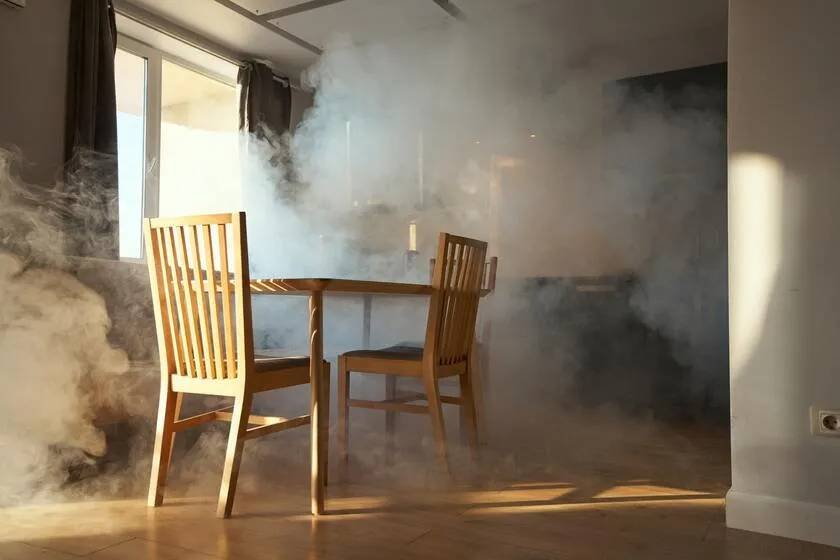
Do not enter or begin cleaning until the fire department or responsible authority allows access and electrical, structural, and air-quality hazards are considered. Avoid touching soot-covered surfaces, switching on HVAC equipment, or using household cleaners that can smear or set residues. Each action should reduce risk, preserve evidence, or improve the next decision.
Stop and keep the area restricted when any of the following is present:
- Unstable structure.
- Damaged wiring or appliances.
- Toxic or corrosive residues.
- Wet ash and soot.
- Carbon monoxide and combustion byproducts.
Do not enter or continue work when electrical, structural, fire, chemical, or contamination hazards are unresolved. Emergency responders and qualified trades should establish safe access first.
A Step-by-Step Response Plan
- Wait for safe access. A building that looks stable can have weakened framing, broken glass, hot spots, damaged utilities, or contaminated water. Follow fire department, utility, building official, and insurer instructions before entering.
- Document before disturbing residue. Photograph rooms, contents, smoke lines, water damage, and the apparent path of the fire. Make a preliminary inventory and keep receipts for emergency expenses. Moving items too early can spread soot and complicate the record.
- Separate electrical repair from cosmetic cleanup. Document components before removal, identify affected circuits, and coordinate electrician findings with restoration. Cleaning a panel exterior does not establish internal safety.
- Limit soot movement. Keep foot traffic low, avoid wiping walls or upholstery, and do not run central HVAC until it has been evaluated. Soot transfers easily to hands, shoes, tools, and unaffected finishes.
- Identify residue and test cleaning. Protein residues, synthetic-material soot, dry soot, oily soot, extinguisher powder, and water-related residues behave differently. A method that works on one surface can streak, etch, corrode, or permanently set another.
- Remove sources before deodorizing. Charred porous materials, contaminated insulation, trapped soot, and affected contents can continue releasing odor. Fragrance or fogging alone may temporarily mask the smell without removing the source.
Do not force later findings into the original plan. Expand or narrow the work only when observations, readings, or access support the change.
Do’s, Don’ts, and Common Mistakes
Do
- Preserve photographs, readings, damaged parts, and a timeline when it is safe to do so.
- Correct or isolate the source through the appropriate qualified trade.
- Protect unaffected rooms, contents, HVAC pathways, and occupants while work is underway.
- Use product labels, equipment instructions, and material-specific guidance instead of improvised mixtures or settings.
- Set clear criteria for drying, cleaning, verification, and reconstruction before closing the file.
Don’t
- Using a household vacuum or dry rag on soot without understanding the residue.
- Turning on the HVAC system and distributing smoke particles through the building.
- Applying fragrance before removing char, soot, and contaminated porous materials.
- Washing walls broadly without a small compatibility test.
- Discarding contents before photographs, inventory, and claim instructions are complete.
- Resetting a tripped breaker after a fire because the room appears cool.
Site-specific hazards and limitations take priority over convenience, speed, or a prewritten sequence.
How a Professional Evaluation Adds Value
A professional scope may include safety stabilization, documentation, source removal, debris handling, soot characterization, surface testing, dry or wet cleaning, contents evaluation, HVAC assessment, controlled odor treatment, and reconstruction coordination. Cleaning methods are tested in small areas before broad use. For electrical fire cleanup safety, the provider should connect each recommended action to an observed condition or documented project criterion.
Review the scope for measurable milestones rather than vague promises. Source status, affected materials, monitoring, cleaning or drying criteria, and repair handoffs should be explicit.
The larger and less certain the affected area, the more important it is to use documented professional judgment rather than cosmetic trial-and-error cleanup. Contact Edwards Property Remediation for a South Florida assessment when the work exceeds a safe, limited owner response.
South Florida and Building-Specific Considerations
South Florida humidity can combine with soot and firefighting water to accelerate corrosion, staining, and odor absorption. Prompt stabilization is important, but speed should not override safe access, documentation, or testing of sensitive finishes. These conditions should be considered when planning a response to electrical fire cleanup safety.
South Florida humidity can combine with soot and firefighting water to accelerate corrosion, staining, and odor absorption. Prompt stabilization is important, but speed should not override safe access, documentation, or testing of sensitive finishes. For electrical fire cleanup safety, measured conditions should guide ventilation, drying, and access decisions.
High outdoor humidity can slow drying and support condensation on cool surfaces. Control air exchange instead of relying on comfort alone.
Prevention and a Better Next-Step Record
After restoration, review smoke alarms, cooking practices, electrical repairs, dryer-vent maintenance, battery charging areas, fire-extinguisher placement, and an evacuation plan. Correct the cause through the appropriate licensed trade before reoccupancy. Tie each preventive task back to the specific source or weak point identified while addressing electrical fire cleanup safety.
A complete project file helps distinguish an old stain or repaired condition from a future event. Preserve original images, final records, warranties, and maintenance reminders.
Before closing a file involving electrical fire cleanup safety, confirm that the source is corrected, affected materials are dry and clean to the project criteria, hidden areas have been addressed, temporary controls are removed, permanent repairs are complete, and occupants or managers know what to monitor. If any answer is uncertain, keep the issue open.
Trusted References and Editorial Boundaries
This guide about electrical fire cleanup safety follows safety-first principles from public guidance and is written for property decision-making. It does not diagnose health conditions, determine legal responsibility, guarantee insurance coverage, or replace an on-site inspection.
- U.S. Fire Administration: After the fire
- FEMA: Residential smoke damage guidance
- FEMA: Documenting property damage
Questions to Ask Before Work Begins
For electrical fire cleanup safety, use the following points to keep the project transparent and reviewable. Written answers are more useful than informal assumptions, especially when several parties are involved.
- What evidence supports the affected boundary?
- Has the source been stopped or assigned to the correct trade?
- Which materials are expected to remain, be cleaned, be dried, or be removed?
- How will readings, products, equipment, and scope changes be documented?
- What must be verified before containment, equipment, or temporary protection is removed?
- Who will communicate with occupants, management, and the insurer, and how often?
Store the answers with the property file for electrical fire cleanup safety and update them when the source, scope, or schedule changes. This reduces repeated site visits and conflicting instructions.
A Practical Documentation Template
For electrical fire cleanup safety, use the following points to keep the project transparent and reviewable. Written answers are more useful than informal assumptions, especially when several parties are involved.
- Incident date and discovery time.
- Who discovered the condition and where.
- Suspected and confirmed source information.
- Safety restrictions and people notified.
- Photos, videos, readings, and affected materials.
- Temporary actions, vendors, equipment, and products.
- Daily progress, decisions, and unresolved questions.
- Final verification, repairs, invoices, and maintenance follow-up.
Store the answers with the property file for electrical fire cleanup safety and update them when the source, scope, or schedule changes. This reduces repeated site visits and conflicting instructions.
Final Review Before Closing the File
Before considering electrical fire cleanup safety complete, walk the affected and adjacent areas with the responsible professional. Confirm that the source repair is documented, temporary protection has been removed, access openings are properly repaired, surfaces are clean, and no unexplained odor, staining, condensation, or elevated reading remains. Record who completed the review, the date, any limitations, and the next maintenance check. This final pause helps prevent an unresolved condition from being hidden by new finishes or normal occupancy.
Frequently Asked Questions
What should I do first?
Keep people away from hazards, identify whether the area is safe to enter, and stop or assign the source when that can be done safely. Photograph conditions before cleanup, then choose actions based on contamination, materials, and access.
Can a property owner handle this without professional help?
A limited owner response may be reasonable only when the source is corrected, the area is small and safely accessible, contamination is not present, and all affected materials can be cleaned and dried. Stop if the area expands, utilities are involved, or hidden damage is suspected.
How long can evaluation, cleanup, or drying take?
There is no reliable fixed duration. The timeline depends on source repair, extent, material layers, contamination, access, drying or cleaning response, inspections, and reconstruction. Ask for measurable milestones and written updates rather than a guaranteed number of days.
What should I document before work begins?
Take wide and detailed photos, record discovery time and suspected source, list rooms and contents, save communications and receipts, and keep logs of readings, equipment, products, removals, and repairs. Follow insurer and safety instructions about preserving damaged parts.
When should I call a restoration professional?
Call when the source is unknown or active, the damage is extensive or hidden, water may be contaminated, mold or fire residue is present, HVAC or electrical systems are involved, occupants are vulnerable, or you cannot verify that materials are clean and dry.
Does this resource determine insurance coverage or health risk?
No. Coverage depends on the policy and claim facts, and health concerns require a qualified medical professional. This resource provides general property guidance and should be reviewed against on-site conditions and local requirements.
When Professional Help Makes Sense
If the property has extensive damage, contaminated water, electrical hazards, persistent moisture, widespread mold, or fire residue, avoid disturbing the area and arrange a professional assessment. Learn about EPR’s Fire Damage Restoration service or contact Edwards Property Remediation at (754) 221-6945.
This educational resource is not medical, legal, or insurance advice. Follow emergency instructions from local authorities and qualified professionals.