
Boynton Beach, Florida
Fire Damage Restoration in Boynton Beach, FL
Soot and smoke residue cleaning, odor removal and cleanup of the water left by firefighting.
- Mold Remediator MRSR2591
- Mold Assessor MRSA3666
- IICRC Certified Firm
Quick answer
Fire damage restoration in Boynton Beach is often a small fire with a large smell: a pan left on the stove, a toaster oven or a dryer. In attached villas smoke can pass into the next unit through a shared attic. We clean the residue, treat the odor at its source and check the neighboring unit if the owner there agrees.
A common call in Boynton Beach is a stovetop fire where food burned in a pan and there were hardly any flames. This kind of smoke leaves a thin, nearly invisible film on walls, cabinets and inside drawers, with a sharp odor that returns on humid days. Because there is little to see, owners often repaint and find the smell is still there. The film has to be washed off every surface, including the inside of cabinets, before any sealing or painting.
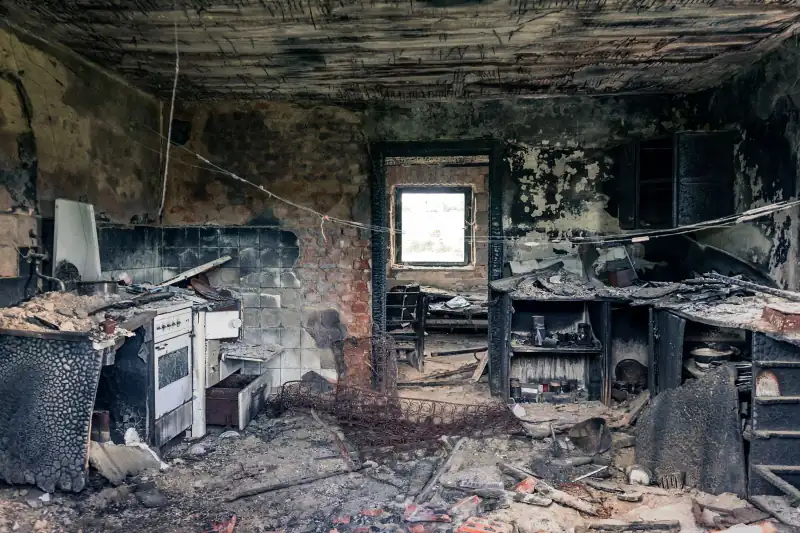
A fire leaves three kinds of damage. There is what burned, there is the smoke and soot carried well beyond the room where the fire started, and there is the water used to put it out. Soot is acidic and keeps working on metal, glass, stone and painted finishes after the fire is out, so residue left in place can tarnish, etch or discolor those surfaces. Smoke follows air currents into closets, cabinets, attics and the AC system, and its odor settles into anything porous.
What the work covers
Soot and smoke residue removal
HEPA vacuuming and dry soot sponges first, then wet cleaning of walls, ceilings, floors, fixtures and contents with the right cleaner for the residue.
Odor removal at the source
Charred and smoke-saturated materials are removed and remaining surfaces are cleaned, because odor stays as long as its source does.
Water extraction and drying
Firefighting water is extracted and the structure is dried with air movers and dehumidifiers, checked with daily moisture readings.
Removal of unsalvageable materials
Burned debris, wet insulation and porous materials too damaged to clean are removed and disposed of.
Air filtration during the work
Portable HEPA air filtration captures the soot particles that cleaning stirs up.
Job documentation
Photographs, moisture readings and a written scope of what was cleaned, dried and removed.
Local conditions in Boynton Beach
Canal and seawall exposure
Homes on canals sit close to the water table. After heavy rain or a high tide, moisture can rise into slabs, garages and the base of walls even when there is no visible flooding.
Shared roofs and plumbing in attached villas
A roof leak or a failed supply line in one villa rarely stays in that villa. Water follows the shared wall and the common attic space, and the neighbor may not know until a stain appears.
Water heaters and appliance hoses
Water heaters in garages and closets, washing machine hoses and refrigerator lines are frequent sources. In a home that is empty for months, a small drip has a long time to spread.
Hurricane season rain
From June 1 to November 30, tropical systems bring long periods of rain and wind. Older windows, sliding doors and roof penetrations are where the water usually gets in.
How fire and smoke damage restoration works
Wait for release and check safety
Work begins after the fire department releases the building. We check for structural, electrical and air hazards before anyone goes in to work.
Assess residue and water
We look at how far smoke traveled, test-clean small areas to identify the type of residue, and map the water left by firefighting with moisture meters.
Extract water and start drying
Standing water is removed and drying equipment is set, following the IICRC S500 standard, so wet materials do not sit while the cleaning is done.
Remove debris and unsalvageable materials
Charred debris and materials that cannot be cleaned are taken out. Removing them takes away a large share of the odor.
Dry-clean the loose soot
Surfaces are HEPA vacuumed and wiped with dry soot sponges before any liquid touches them. Water applied too early smears dry soot into paint and porous surfaces.
Wet clean structure and contents
Remaining residue is washed off with cleaners matched to the residue and the surface, working from the ceiling down. Salvageable contents are cleaned the same way.
Treat remaining odor and document
After the sources are gone, HEPA and carbon air filtration run to clear the air. Cleaned framing that still holds odor may be sealed before a contractor closes the walls. You receive the job record.
Questions
Fire and smoke damage in Boynton Beach: questions
Something else? Call (754) 221-6945.
Why does my Boynton Beach home still smell like smoke, and will fire damage restoration fix it?
The smell stays because residue stays. Smoke from burned food leaves a pale film that is hard to see and is spread through the home by the air conditioning. Painting over it or using air fresheners does not remove it, and humidity brings the odor back. Fire damage restoration cleans the film from walls, ceilings, cabinets and contents, then treats what odor remains. The AC filter should be replaced at the same time.
How much does fire damage restoration cost?
Edwards Property Remediation prices each fire job after seeing it. The cost depends on how far smoke and soot spread, the type of residue, how much firefighting water has to be extracted and dried, how many contents need cleaning and how much material has to be removed. A stove fire confined to a kitchen is a different job from smoke through a whole house. We put the scope in writing before work starts.
Does homeowners insurance cover fire and smoke damage?
Fire is one of the losses homeowners policies are generally written for, but what is paid, and for which items, depends on your policy and your insurer. Report the fire promptly and ask your adjuster what is needed before cleanup begins. We document the job with photographs, moisture readings and a written scope so you have a clear record for your claim.
How long does fire damage cleanup take?
It depends on the size of the fire, how far smoke traveled, the type of residue and how much water was used to put it out. Drying wet materials is measured in daily readings, and cleaning time grows with the number of rooms and contents affected. Rebuilding by a contractor is a separate phase that follows. We give an expected schedule in the written scope after the first inspection.
Can I clean soot and smoke damage myself?
Light residue from a small, contained incident can sometimes be handled by a careful homeowner. The common mistake is wiping soot with a wet cloth or household cleaner, which smears it into paint and makes staining permanent. Soot should be vacuumed with a HEPA vacuum and lifted with dry soot sponges first. Widespread residue, smoke in the AC system or firefighting water calls for professional cleanup.
Request service
Tell us what happened in Boynton Beach
Call if water is still moving or the building is not safe. For everything else, send the details and the office will get back to you.
- Florida-licensed mold remediator and mold assessor
- IICRC Certified Firm for water damage and structural drying
- Photographs, moisture readings and a written scope on every job
Open 24 hours · 980 N Federal Highway, Suite 110, Boca Raton, FL 33432
Request service
Goes straight to the EPR office in Boca Raton.